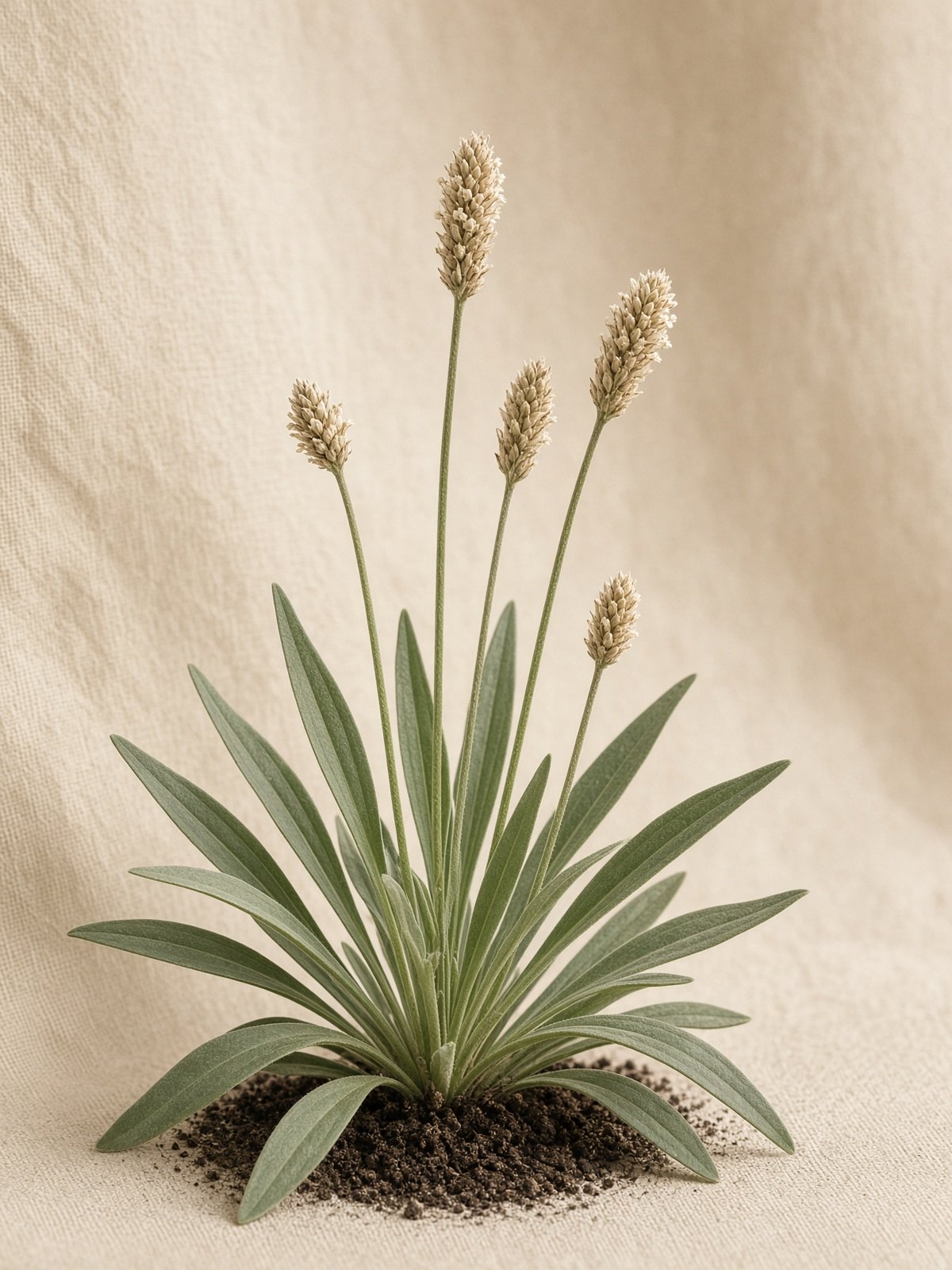
Plantaginaceae · seed, seed husk
Psyllium
Plantago ovata
Husk is a food-like soluble fiber mapped to meta-analyses for stool bulk and modest LDL-cholesterol changes. It is not a stimulant laxative.
Safety first
Must be taken with a full glass of water. Dry or inadequately wetted husk can obstruct the throat or gut. Separate from oral drugs by at least 1–2 hours.
Tradition vs trials
Traditional record. Unani/Ayurvedic and Western records use ispaghula husk as a bulk-forming demulcent.
Trial literature. Meta-analyses support stool-frequency and LDL-cholesterol changes at adequate fiber doses taken with water. Glucose-endpoint data are more modest.
Practical ranges
Educational ranges — not a prescription. Culinary use is not an extract.
husk (adults)
Constipation and lipid meta-analyses commonly use about 7–20 g husk daily, always with adequate fluid
WHO monographs / ESCOP — Educational range only — not a prescription. A licensed clinician individualizes product, dose, and duration.
Pregnancy, nursing, children
- Pregnancy. Bulk fiber with water is generally regarded as compatible; still a clinician decision if obstruction risk exists.
- Nursing. Not systemically absorbed; culinary-type fiber use is generally compatible.
- Children. Only with enough water and clinician guidance; choking and obstruction risk is higher if fluid is inadequate.
Contraindications
- swallowing difficulty
- known or suspected bowel obstruction
- fecal impaction
- inadequate access to water
Key interactions
- oral drugs · caution
Viscous fiber can reduce or delay absorption of many oral medicines. Separate dosing.
Used in these diagnoses
- IBSDigestive
- Chronic constipationDigestive
- Type 2 diabetes (adjunct)Endocrine / Metabolic
- Metabolic syndromeEndocrine / Metabolic
- Chronic low-grade inflammationImmune / Rheum / Allergy
- General inflammation supportOther / General
- HemorrhoidsDigestive
- Acute nonspecific diarrheaDigestive
- Stable diverticular diseaseDigestive
- Weight management (adjunct)Endocrine / Metabolic
- Traveler's diarrheaDigestive
- IBD (UC / Crohn) adjunctDigestive
- Hypothyroidism (warning)Endocrine / Metabolic
- Anal fissure (supportive)Digestive