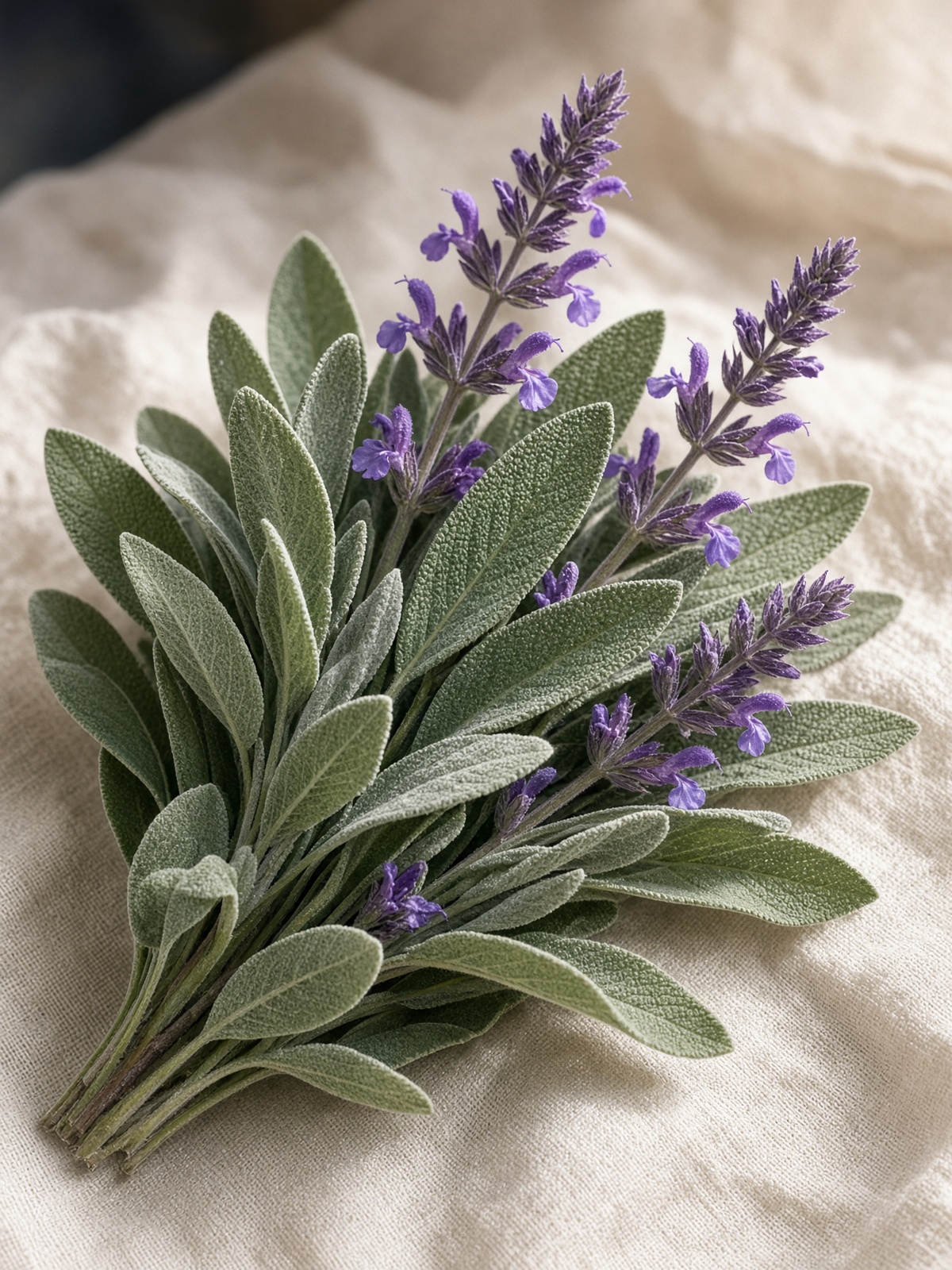
Lamiaceae · leaf
Sage
Salvia officinalis
Leaf mapped as traditional gargle and antisudorific. Cognition and menopausal files are modest and extract-specific.
Safety first
Culinary leaf is food-like. Essential oil is thujone-rich and is not a gargle to swallow. Not HRT. Small cognition studies use extracts, not stuffing herbs.
Tradition vs trials
Traditional record. European kitchen and official leaf. Commission E recorded dyspepsia and hyperhidrosis-type language.
Trial literature. Gargle tradition is older than RCTs. Some menopausal-sweat and cognition extract trials exist; culinary leaf is not those extracts.
Practical ranges
Educational ranges — not a prescription. Culinary use is not an extract.
leaf tea / gargle
Commission E-type leaf ranges are often a few grams daily as infusion; oil is a different object
ESCOP / German Commission E — Educational range only — not a prescription. A licensed clinician individualizes product, dose, and duration.
Pregnancy, nursing, children
- Pregnancy. Culinary leaf is food-like; medicinal oil and high-thujone products avoid.
- Nursing. Insufficient reliable data; avoid unless a clinician directs otherwise.
- Children. Culinary food. Oil is not for children.
Contraindications
- swallowing essential oil
- known sage allergy
Key interactions
- anticonvulsants · note
Thujone neurotoxicity is an oil problem, not stuffing.