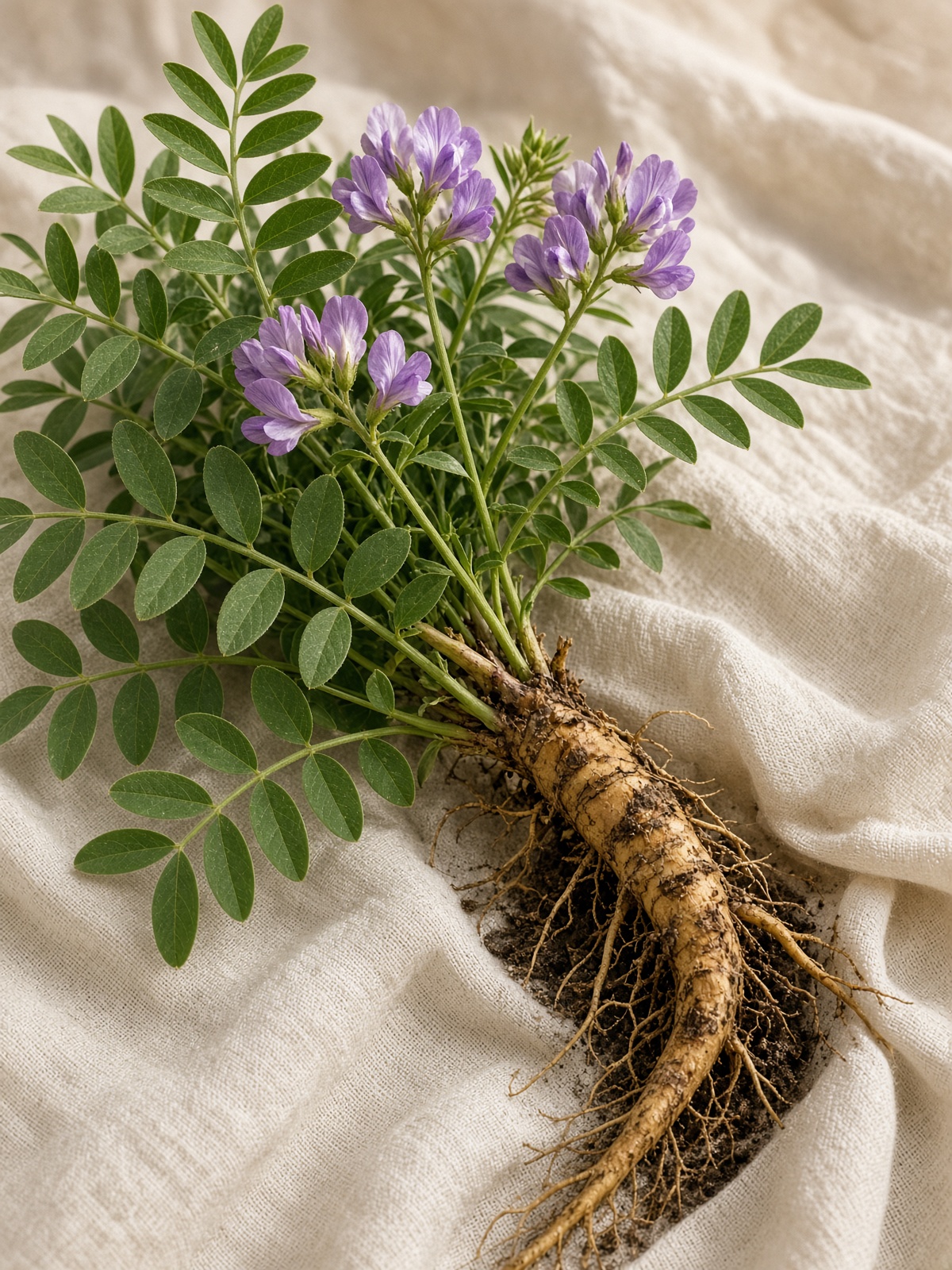
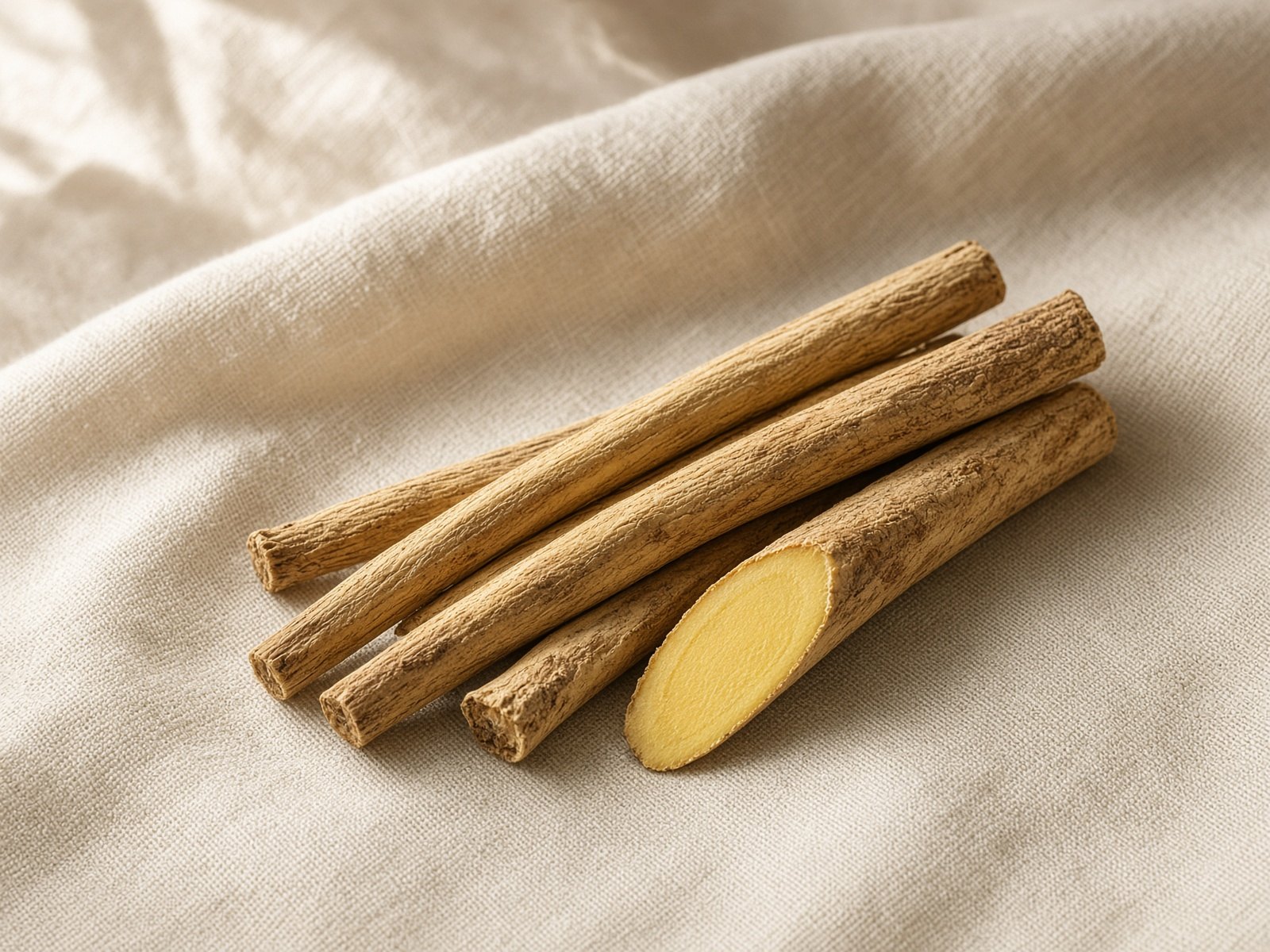
Fabaceae · root, stolon
Licorice
Glycyrrhiza glabra
Root mapped in this catalog across Western, TCM (gan cao), and Ayurvedic records. Human data exist for several GI and cortisol-related endpoints; mineralocorticoid toxicity dominates safety.
Safety first
Glycyrrhizin can cause pseudoaldosteronism — hypertension, sodium retention, and hypokalemia — even from candy or tea with chronic use. Deglycyrrhizinated licorice (DGL) is a different preparation with the glycyrrhizin removed.
Tradition vs trials
Traditional record. TCM uses gan cao to harmonize formulas. Western monographs record demulcent and expectorant use. Ayurveda records yashtimadhu similarly.
Trial literature. Human studies include GI mucosal and metabolic endpoints. Duration limits in European monographs exist because of glycyrrhizin, not because trials were large or definitive.
Practical ranges
Educational ranges — not a prescription. Culinary use is not an extract.
whole root (short-term)
Commission E listed about 5–15 g root daily, generally not beyond 4–6 weeks without clinician oversight, because of glycyrrhizin
German Commission E / ESCOP — Educational range only — not a prescription. A licensed clinician individualizes product, dose, and duration.
Pregnancy, nursing, children
- Pregnancy. Avoid medicinal licorice in pregnancy. High glycyrrhizin intake has been associated with adverse pregnancy signals; this is not a food-spice decision.
- Nursing. Medicinal licorice lacks adequate lactation safety data; glycyrrhizin effects are a concern.
- Children. Do not give medicinal licorice to children unless a clinician directs otherwise. Candy overuse can still cause hypokalemia.
Contraindications
- uncontrolled hypertension
- hypokalemia
- chronic kidney disease
- cholestatic liver disease (monograph cautions)
- pregnancy (medicinal use)
Key interactions
- diuretics / digoxin · avoid
Hypokalemia from glycyrrhizin potentiates arrhythmia risk with digoxin and loop/thiazide diuretics.
- antihypertensives · caution
Licorice can antagonize blood-pressure control.