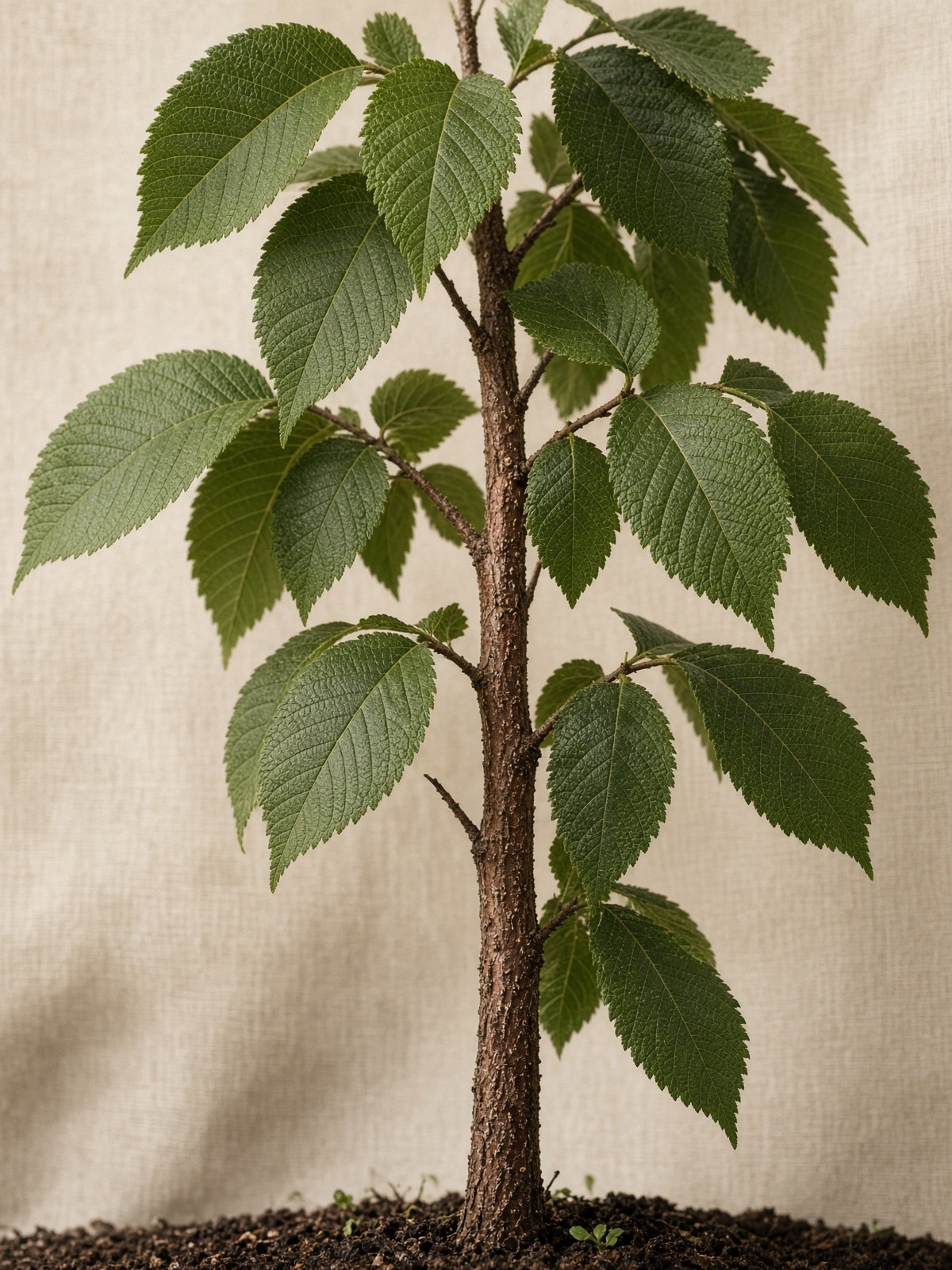
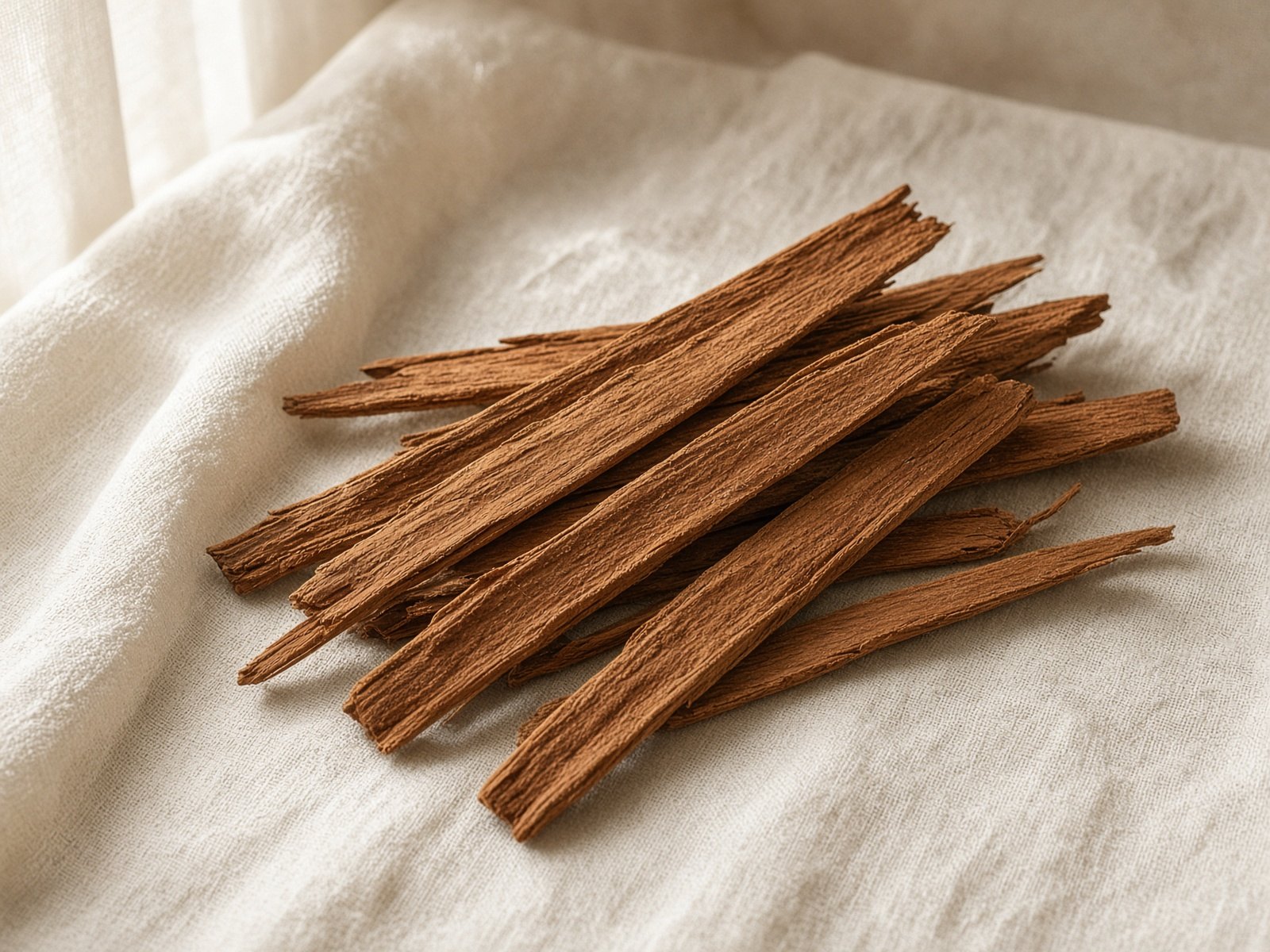
Ulmaceae · inner bark
Slippery elm
Ulmus rubra
North American inner bark mapped as a traditional demulcent for irritated mucosa. Human trials are essentially absent.
Safety first
Inner-bark mucilage is mechanically soothing but can delay absorption of oral drugs. Wild populations have been pressured by bark harvest — identity and sustainability matter.
Tradition vs trials
Traditional record. Eclectic and Indigenous North American records use the inner bark as a gruel or lozenge for throat and gut irritation.
Trial literature. No high-quality standalone clinical trial literature. Demulcent action is physical, not a disease-modifying claim.
Practical ranges
Educational ranges — not a prescription. Culinary use is not an extract.
inner-bark powder
Traditional Western ranges are often 4–10 g powder as a gruel, one to several times daily; this is tradition, not a trial dose
AHP — Educational range only — not a prescription. A licensed clinician individualizes product, dose, and duration.
Pregnancy, nursing, children
- Pregnancy. Insufficient reliable data; avoid unless a clinician directs otherwise.
- Nursing. Insufficient reliable data; avoid unless a clinician directs otherwise.
- Children. Traditional gruels exist, but reliable pediatric data do not. Choking/viscosity is a concern in young children.
Contraindications
- known elm allergy
- bowel obstruction
Key interactions
- oral drugs · caution
Mucilage can slow absorption. Separate by 1–2 hours.