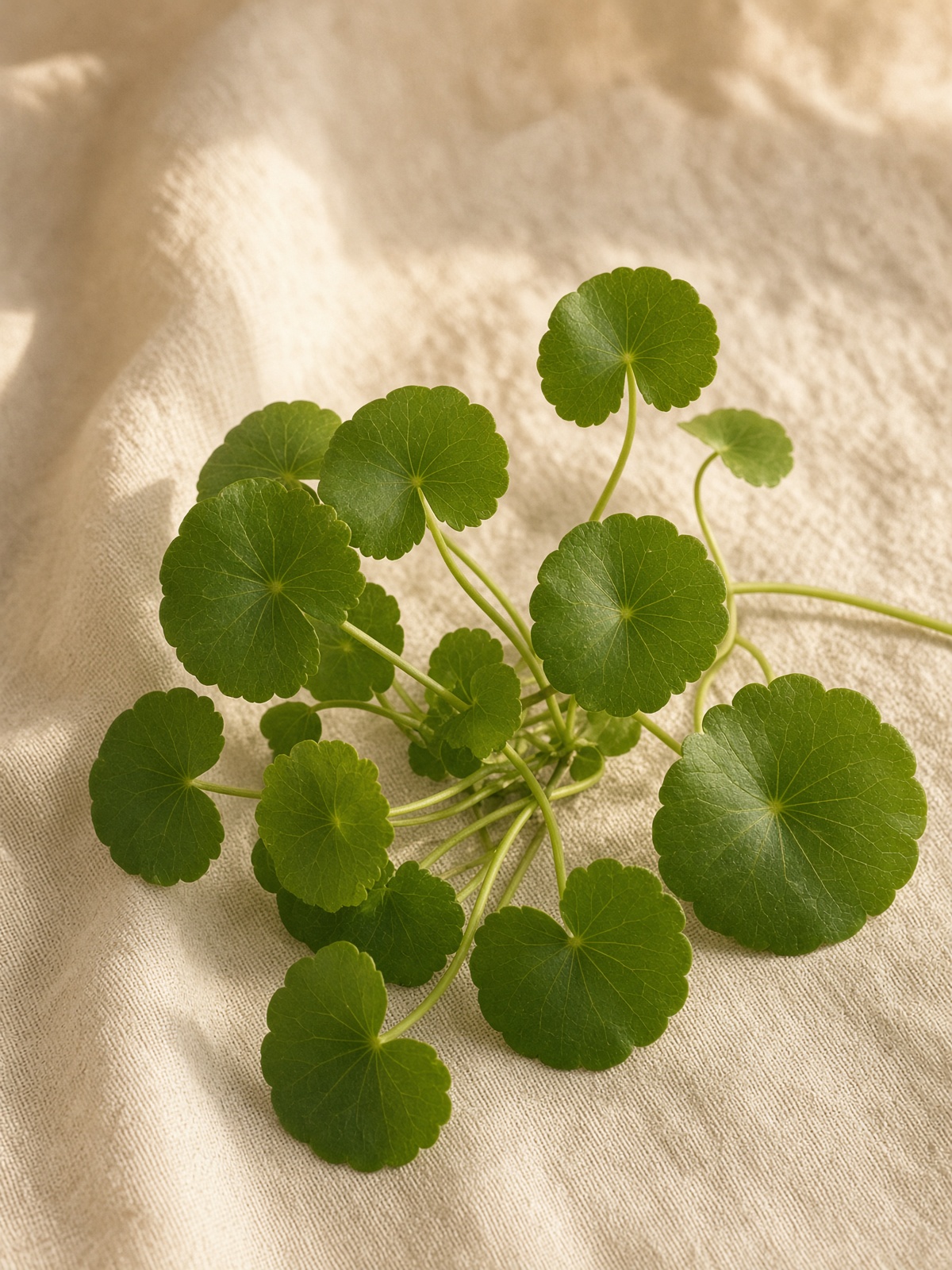
Apiaceae · aerial parts
Gotu kola
Centella asiatica
Leaf mapped to human venous-insufficiency and wound-healing extract trials, plus smaller cognitive studies. Food-like greens in some cuisines are not the same as triterpene extracts.
Safety first
Herb has human data for chronic venous and wound-related endpoints and small cognition trials. Rare hepatotoxicity reports exist. Do not confuse the name brahmi with Bacopa.
Tradition vs trials
Traditional record. Ayurvedic mandukaparni is a medhya and skin rasayana. Southeast Asian food use of the fresh leaf is culinary.
Trial literature. Standardized total-triterpene extracts appear in CVI and scar/wound trials. Cognition trials are smaller. EMA has assessed Centella preparations.
Practical ranges
Educational ranges — not a prescription. Culinary use is not an extract.
triterpene extract
Venous-trial products often provide about 60–180 mg/day of total Centella triterpenes; crude-leaf traditional amounts differ
ESCOP / EMA HMPC — Educational range only — not a prescription. A licensed clinician individualizes product, dose, and duration.
Pregnancy, nursing, children
- Pregnancy. Insufficient reliable data; avoid unless a clinician directs otherwise.
- Nursing. Insufficient reliable data; avoid unless a clinician directs otherwise.
- Children. Insufficient reliable data; avoid unless a clinician directs otherwise.
Contraindications
- known Apiaceae allergy
- unexplained jaundice while using extracts
Key interactions
- hepatotoxic drugs · caution
Rare liver-injury reports with extracts.