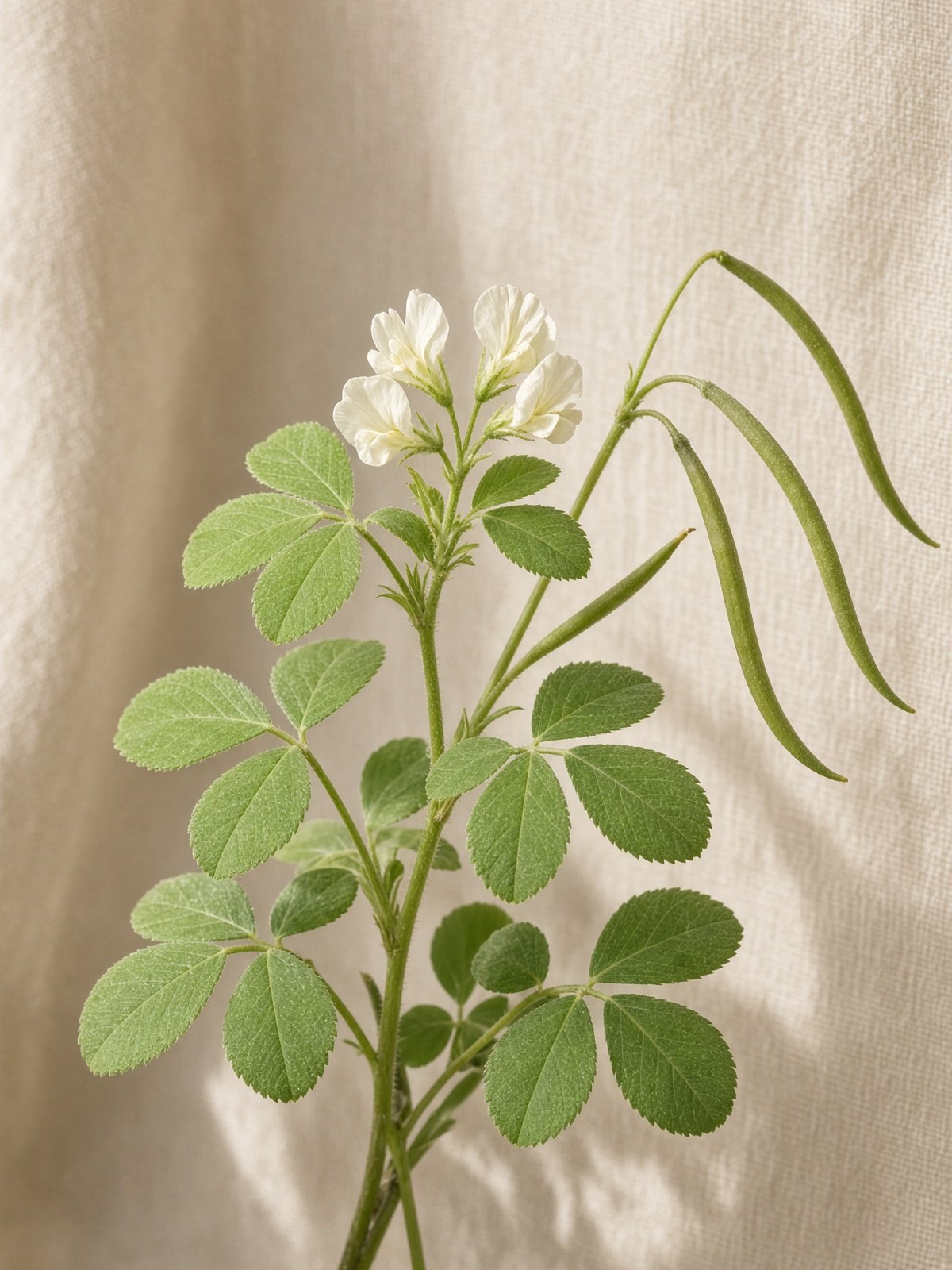
Fabaceae · seed
Fenugreek
Trigonella foenum-graecum
Seed mapped to human glycemic and modest lactation-related trials. Spice-jar methi is not interchangeable with high-dose debittered extracts.
Safety first
Culinary seed is food-like. Medicinal amounts have human data for glucose parameters and traditional lactation use, plus Fabaceae/peanut-type allergy and a maple-syrup body-odor effect. Not a bland 'hormone-free' product.
Tradition vs trials
Traditional record. Ayurvedic and Mediterranean food-medicine records use the seed as a bitter, demulcent, and galactagogue.
Trial literature. Human trials report changes in glucose parameters and some lactation-volume endpoints. Quality is mixed; allergy and pregnancy caveats remain.
Practical ranges
Educational ranges — not a prescription. Culinary use is not an extract.
seed powder
Glycemic trials often use about 5–25 g seed powder daily with food; traditional culinary amounts are lower. Not a prescription
WHO monographs / NCCIH — Educational range only — not a prescription. A licensed clinician individualizes product, dose, and duration.
Pregnancy, nursing, children
- Pregnancy. Culinary spice is food-like. Medicinal/high-dose seed has uterine-stimulant traditional cautions — avoid unless a clinician directs otherwise.
- Nursing. Traditional galactagogue. Human data exist but are not definitive; allergy and glucose effects still apply. Clinician-directed if used.
- Children. Culinary spice is food; medicinal powders are not pediatric by default.
Contraindications
- chickpea/peanut/Fabaceae allergy
- medicinal doses in pregnancy unless clinician-directed
Key interactions
- antidiabetes drugs · caution
Additive hypoglycemia possible at trial doses.
- anticoagulants · note
Theoretical antiplatelet signals; culinary amounts are generally low concern.