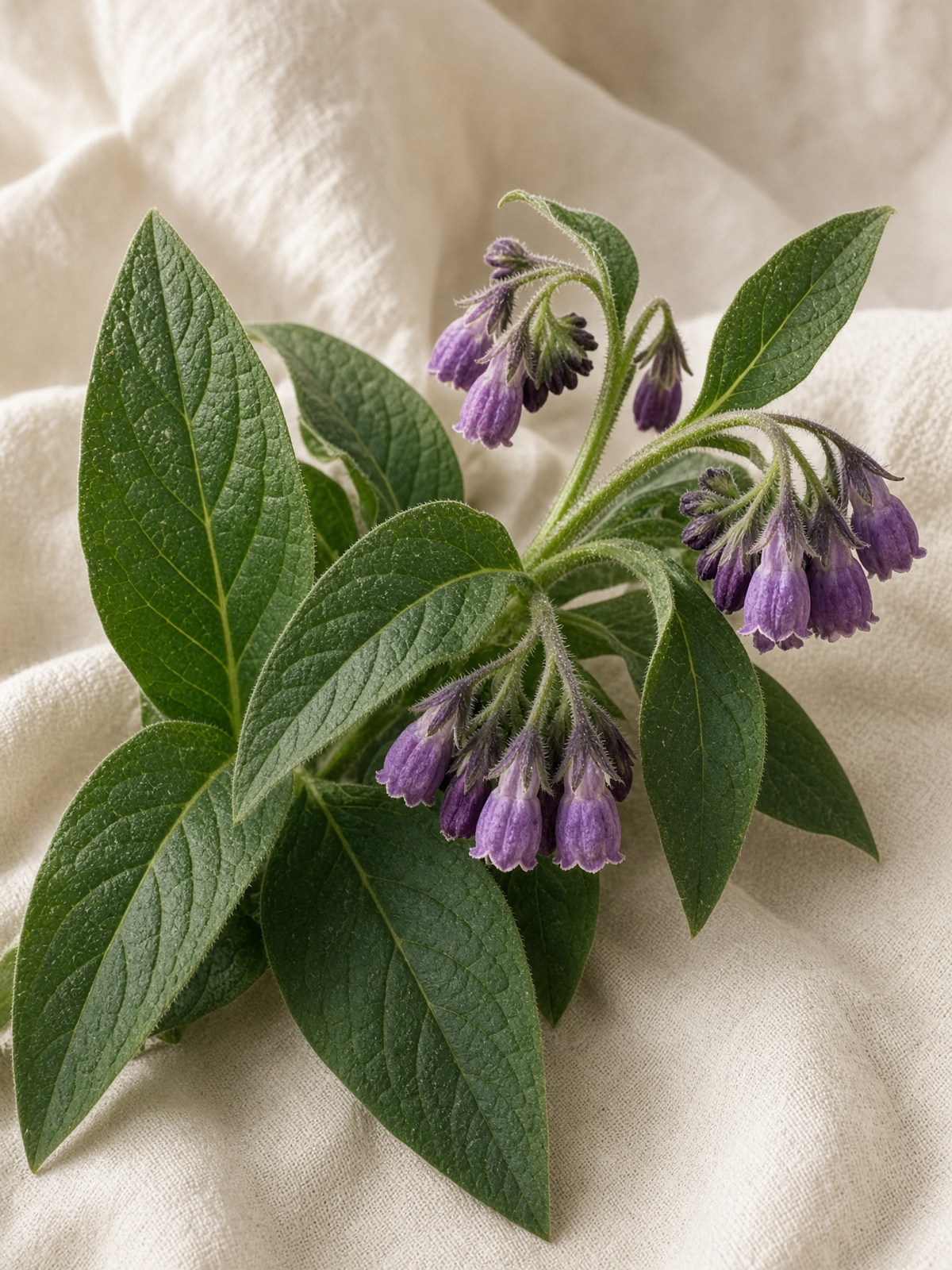
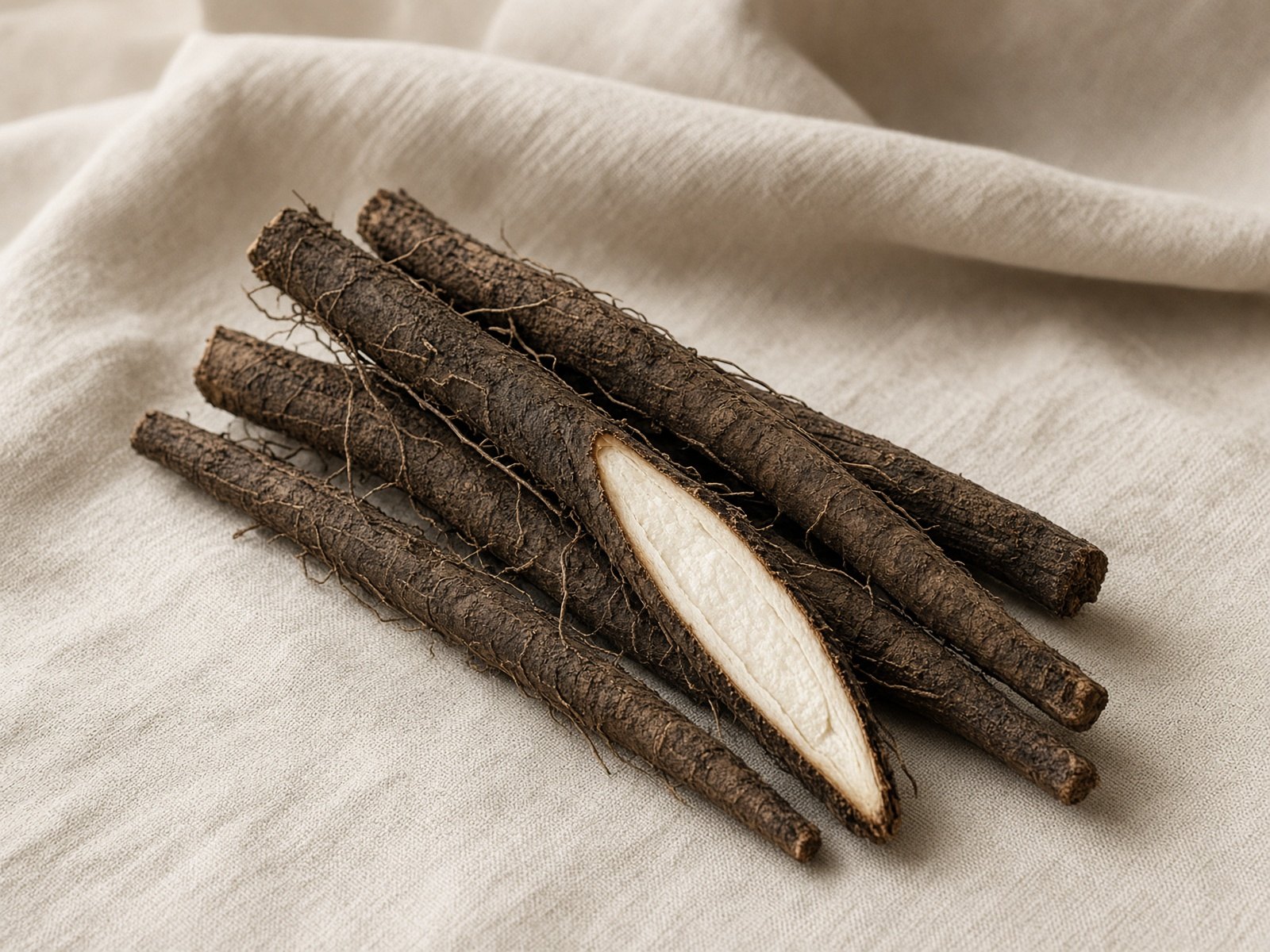
Boraginaceae · leaf, root
Comfrey
Symphytum officinale
Root and leaf have topical sprain-trial literature and a hard stop on internal use. Listed so the PA warning is in front, not so anyone shops a tea.
Safety first
Contains unsaturated pyrrolizidine alkaloids associated with hepatic sinusoidal obstruction and genotoxicity. Internal use is not recommended. External use: short-term, intact skin only — never on broken skin, never in pregnancy. Toxicity warning entry.
This entry exists so you do not use the plant casually. It is not a treatment suggestion.
Tradition vs trials
Traditional record. European vulnerary and bone-knit folklore. Commission E recorded external use; later PA toxicology overran internal tradition.
Trial literature. Short-term topical products have human sprain and back-pain files. Those trials do not license broken-skin or internal use.
Practical ranges
Educational ranges — not a prescription. Culinary use is not an extract.
topical, intact skin
European assessments limit duration (often on the order of 1–2 weeks) and exclude broken skin — not a poultice protocol
EMA HMPC / German Commission E — Educational range only — not a prescription. A licensed clinician individualizes product, dose, and duration.
Pregnancy, nursing, children
- Pregnancy. Avoid (internal and external).
- Nursing. Avoid.
- Children. Avoid.
Contraindications
- internal use
- broken skin
- pregnancy
- pre-existing liver disease
- long-term external use
Key interactions
- hepatotoxic drugs / CYP3A4 inhibitors · avoid
Internal PA plus other liver injury is stacking. Internal use is already out of scope.
Used in these diagnoses
- Osteoarthritis of the kneeMusculoskeletal
- Nonspecific low back painMusculoskeletal
- Neck pain / cervical strainMusculoskeletal
- Mild tendinopathyMusculoskeletal
- Acute sprain (external plants)Musculoskeletal
- Sciatica (adjunct)Musculoskeletal
- Plantar fasciitisMusculoskeletal
- Alcohol-associated liver disease (warning)Hepatic
- Lateral epicondylitisMusculoskeletal
- Hand osteoarthritisMusculoskeletal
- Delayed-onset muscle sorenessMusculoskeletal