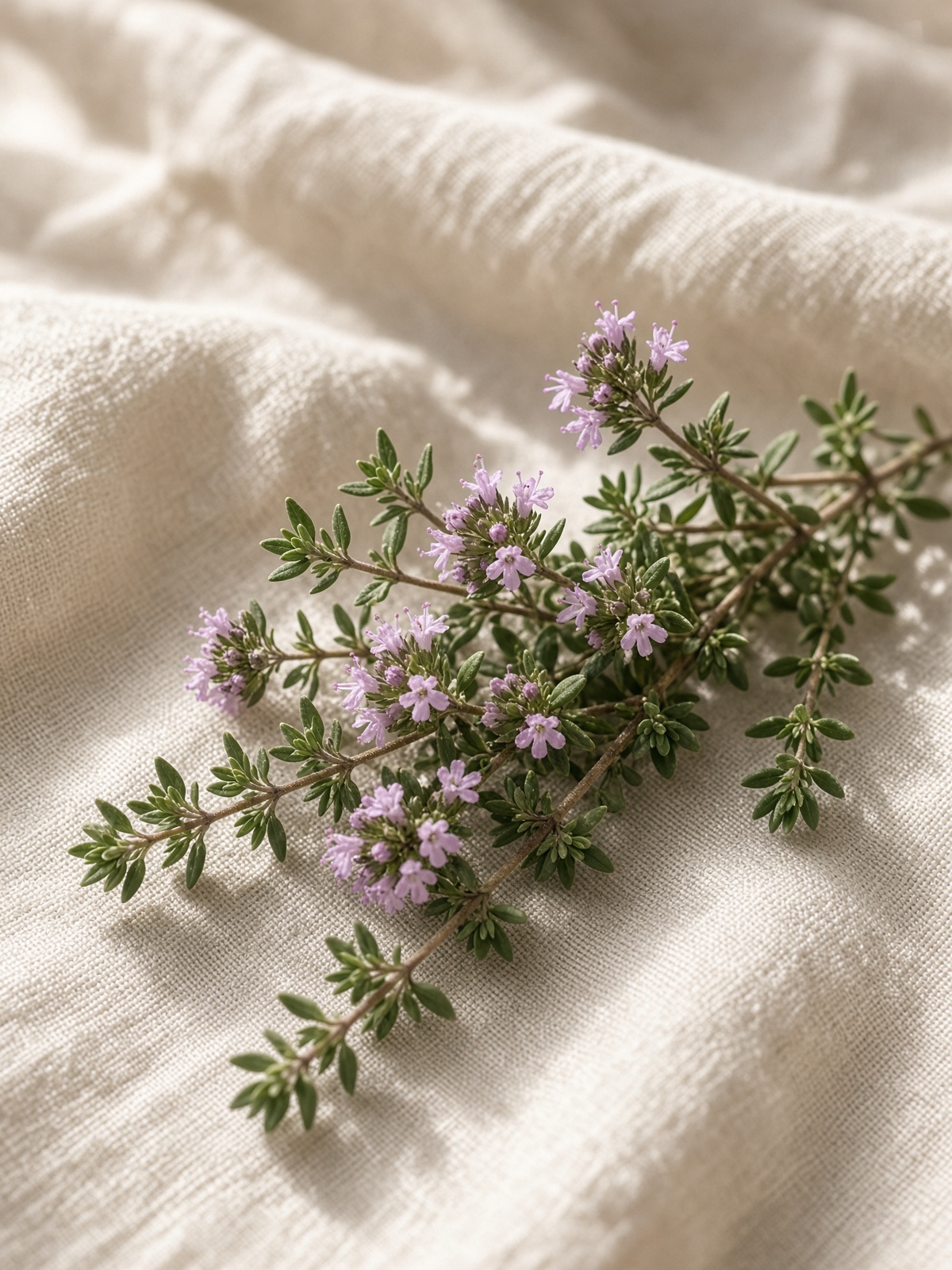
Lamiaceae · herb
Thyme
Thymus vulgaris
Herb mapped as a traditional spasmolytic/expectorant. Oil is a different, more hazardous object.
Safety first
Culinary herb is food-like. Essential oil is not tea — thymol is caustic in concentration and not for infants.
Tradition vs trials
Traditional record. Commission E and ESCOP record thyme for bronchitis-type cough language.
Trial literature. Combination products (thyme + ivy or primrose) have more trial literature than thyme tea alone.
Practical ranges
Educational ranges — not a prescription. Culinary use is not an extract.
herb
Commission E-type tea ranges are often a few grams of herb daily as infusion
ESCOP / German Commission E — Educational range only — not a prescription. A licensed clinician individualizes product, dose, and duration.
Pregnancy, nursing, children
- Pregnancy. Culinary herb is food-like; essential oil internally is not.
- Nursing. Insufficient reliable data; avoid unless a clinician directs otherwise.
- Children. Culinary food. Essential oil is not for young children.
Contraindications
- known thyme allergy
- do not give thyme oil to infants
Key interactions
- none distinctive at culinary doses · note
Oil is a different interaction object.