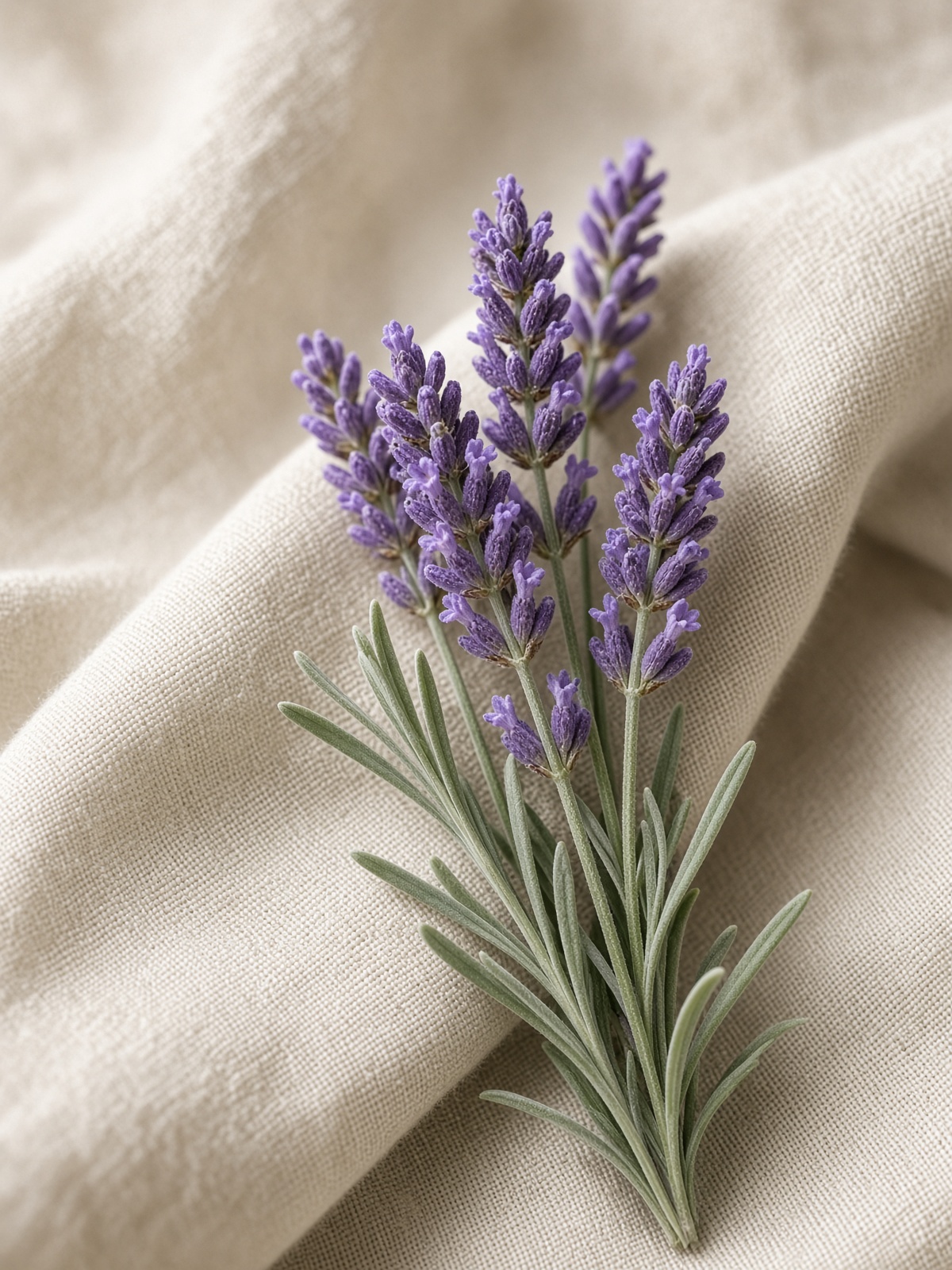
Lamiaceae · flower, essential oil
Lavender
Lavandula angustifolia
Flower and a specified oral oil preparation are mapped to human anxiety-related trials. Aromatherapy evidence is softer and not equivalent.
Safety first
Flower tea is gentle. Internal essential-oil capsules used in adult anxiety trials are a drug-like preparation — not a dropper of aromatherapy oil in water. Do not ingest ornamental or spike lavender oils.
Tradition vs trials
Traditional record. European tradition uses the flower as a gentle nervine tea and the oil as a fragrance and topical.
Trial literature. Adult trials of a standardized oral lavender oil (often discussed as Silexan-type products) report anxiety-scale changes. This catalog does not treat every lavender oil as that product.
Practical ranges
Educational ranges — not a prescription. Culinary use is not an extract.
oral lavender oil (adults)
Specified trial products often use 80 mg/day of a defined L. angustifolia oil in capsules; this is a researched product range, not kitchen oil
EMA HMPC — Educational range only — not a prescription. A licensed clinician individualizes product, dose, and duration.
Pregnancy, nursing, children
- Pregnancy. Flower tea is traditionally used; internal essential oil lacks adequate pregnancy data.
- Nursing. Flower tea is traditionally used; internal essential oil lacks adequate lactation data.
- Children. Do not give internal essential oil. Weak flower tea is traditional in some European practice; still a clinician decision.
Contraindications
- known lavender allergy
- do not ingest non-specified aromatherapy oils
Key interactions
- CNS depressants · caution
Additive sedation possible with internal oil.
Used in these diagnoses
- Mild situational anxietyNervous / Mental
- Generalized anxiety (mild–moderate)Nervous / Mental
- Tension-type headacheNervous / Mental
- Stress / burnoutNervous / Mental
- Mild depression (adjunct)Nervous / Mental
- Muscle tension / myofascial painMusculoskeletal
- Stress-related physical symptomsOther / General
- Fibromyalgia (adjunct)Musculoskeletal
- Jet lag (adjunct)Other / General
- Tinnitus (adjunct)Nervous / Mental
- Pre-operative anxietyNervous / Mental
- Postpartum mood (adjunct)Women’s Health