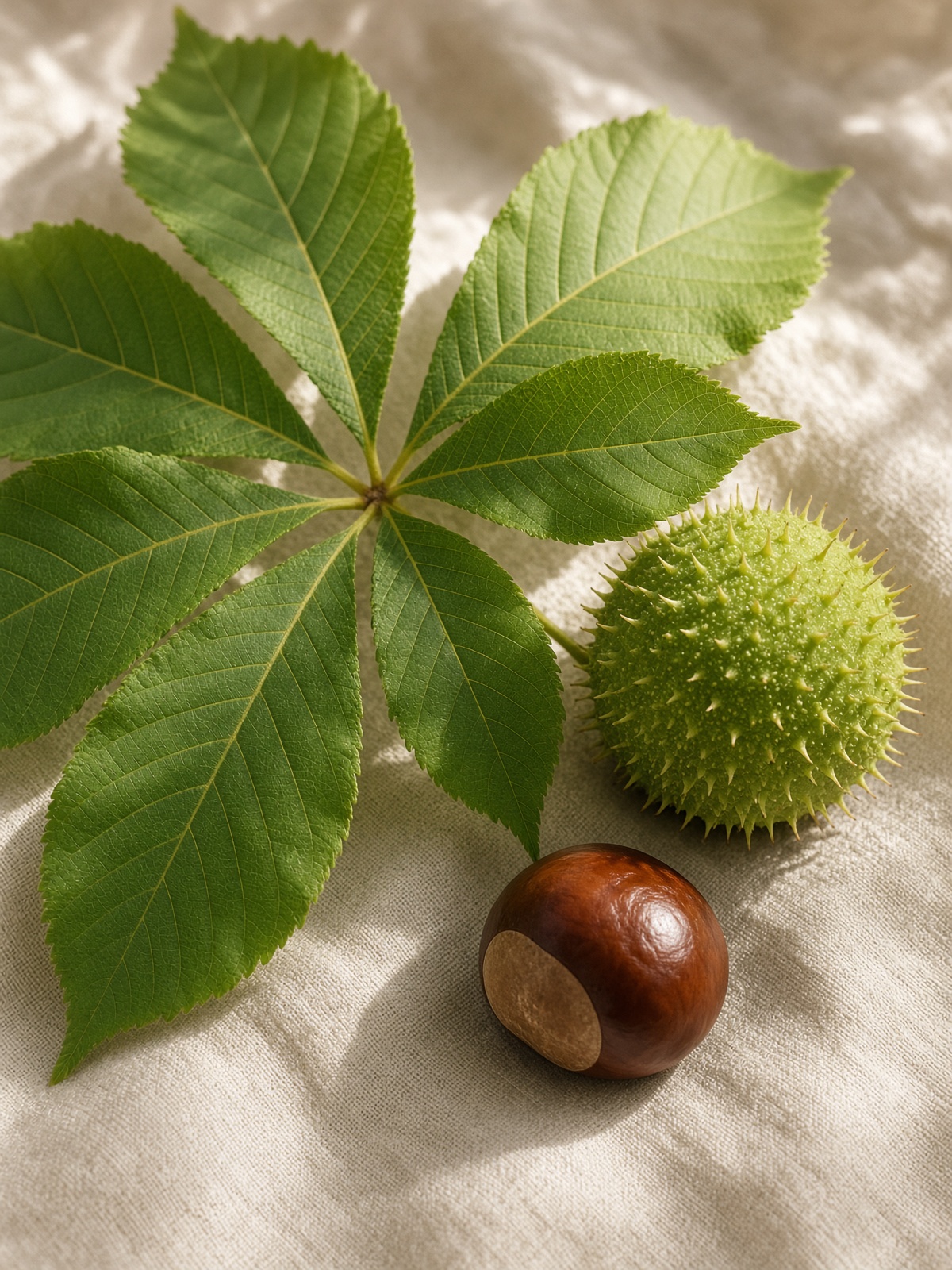
Sapindaceae · seed
Horse chestnut
Aesculus hippocastanum
Human clinical trialsUse with caution
Seed extract mapped to human CVI trials of aescin products. Not a DVT treatment.
Safety first
Raw seed is toxic. Only standardized aescin extracts are the catalog object. Exclude DVT. Compression remains first-line.
Tradition vs trials
Traditional record. European venous-tonic. Commission E recorded seed extract for CVI symptoms.
Trial literature. Aescin-standardized extracts have human CVI symptom data.
Practical ranges
Educational ranges — not a prescription. Culinary use is not an extract.
aescin (adults)
Often about 50–150 mg aescin daily in European CVI products
ESCOP / EMA HMPC — Educational range only — not a prescription. A licensed clinician individualizes product, dose, and duration.
Pregnancy, nursing, children
- Pregnancy. Avoid medicinal extracts unless a clinician directs otherwise.
- Nursing. Insufficient reliable data; avoid unless a clinician directs otherwise.
- Children. Insufficient reliable data; avoid unless a clinician directs otherwise.
Contraindications
- raw seed ingestion
- do not delay DVT evaluation
Key interactions
- anticoagulants · note
Theoretical; raw seed is a different toxicology.