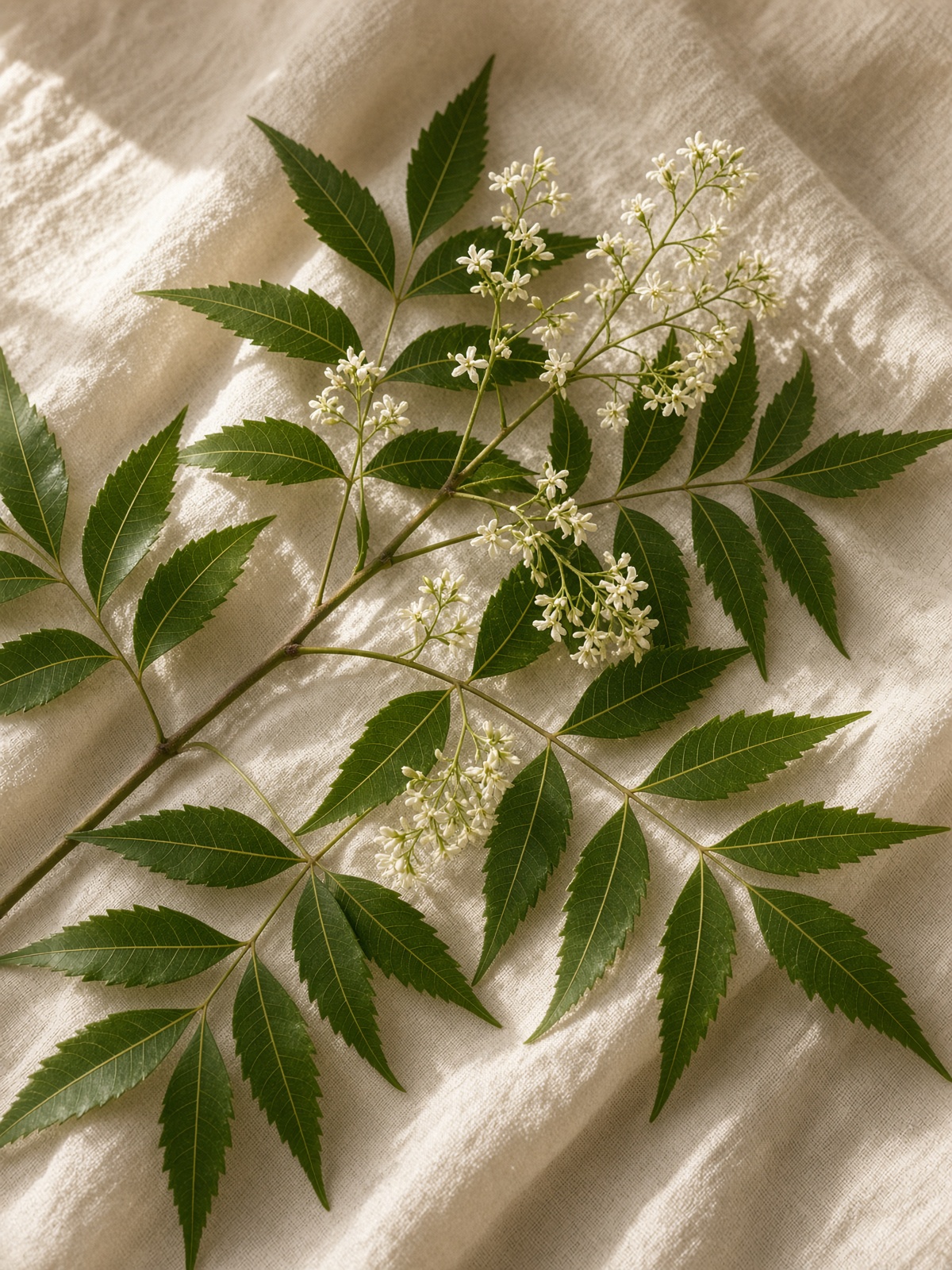
Meliaceae · leaf, seed oil, bark
Neem
Azadirachta indica
Classical pitta-skin and krimighna plant. Internal seed oil is a different, more hazardous conversation than leaf paste.
Safety first
Seed oil is not a food and has pediatric toxicology reports. Leaf is the usual classical internal bitter; even then, pregnancy avoid. External skin use is the less hazardous object. Not a food in quantity.
Tradition vs trials
Traditional record. Ayurvedic Pharmacopoeia: nimba leaf, bark, oil. Village use is broad; toxicology of oil is the modern safety story.
Trial literature. Human internal outcome trials are not the basis of this mapping. Topical and public-health insecticide uses are outside this materia medica's claims.
Practical ranges
Educational ranges — not a prescription. Culinary use is not an extract.
leaf
Classical decoction ranges exist in API; this catalog treats them as traditional, not a prescription
Ayurvedic Pharmacopoeia of India / WHO monographs — Educational range only — not a prescription. A licensed clinician individualizes product, dose, and duration.
Pregnancy, nursing, children
- Pregnancy. Avoid (especially oil and concentrated internal products).
- Nursing. Avoid concentrated products; oil is not a nipple application.
- Children. Seed oil ingestion is a documented pediatric toxicology problem. Not a pediatric DIY plant.
Contraindications
- internal seed oil
- pregnancy
- infants
Key interactions
- antidiabetics · caution
Theoretical glucose-lowering with leaf; hypoglycemia stacking.