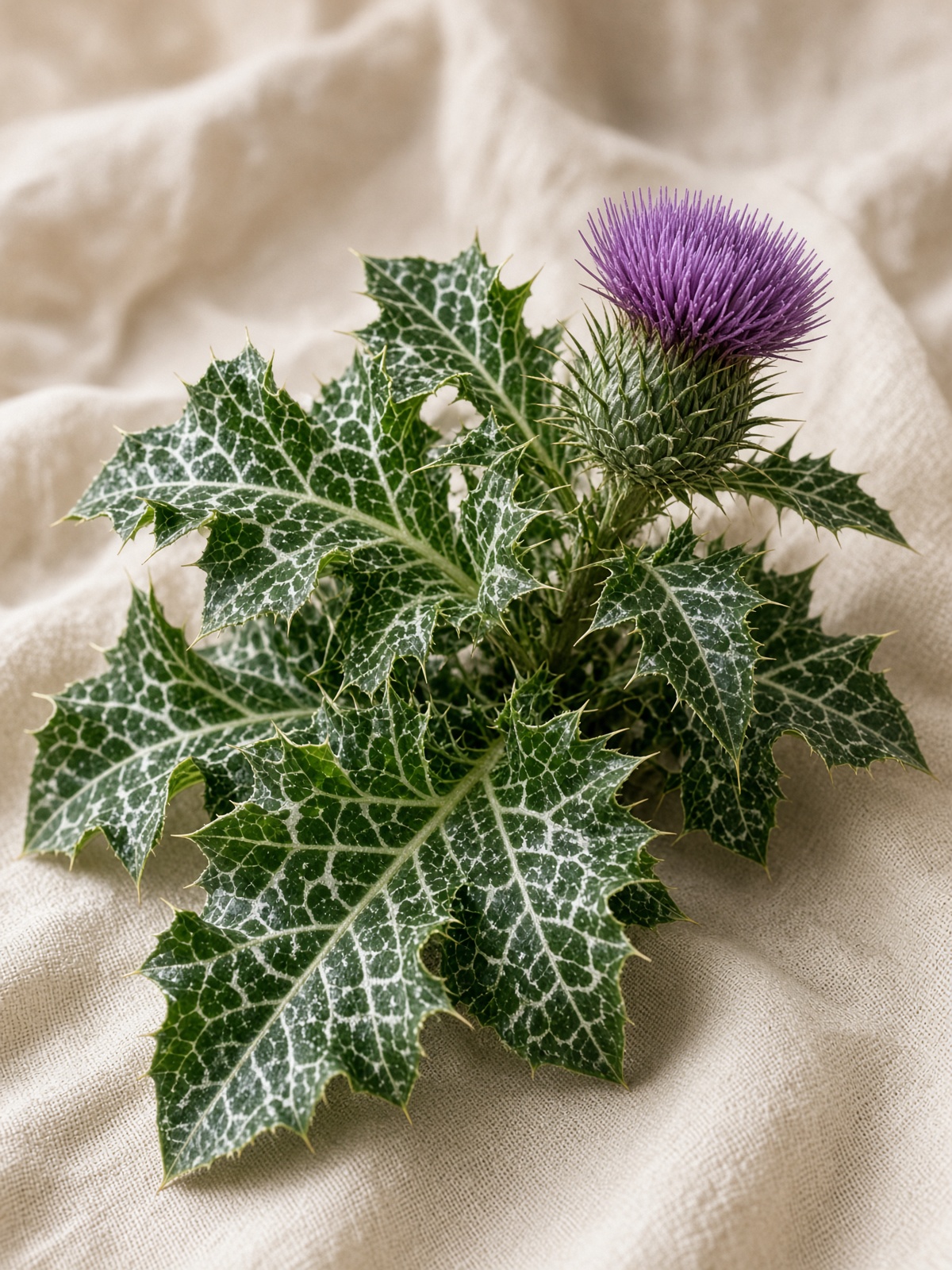
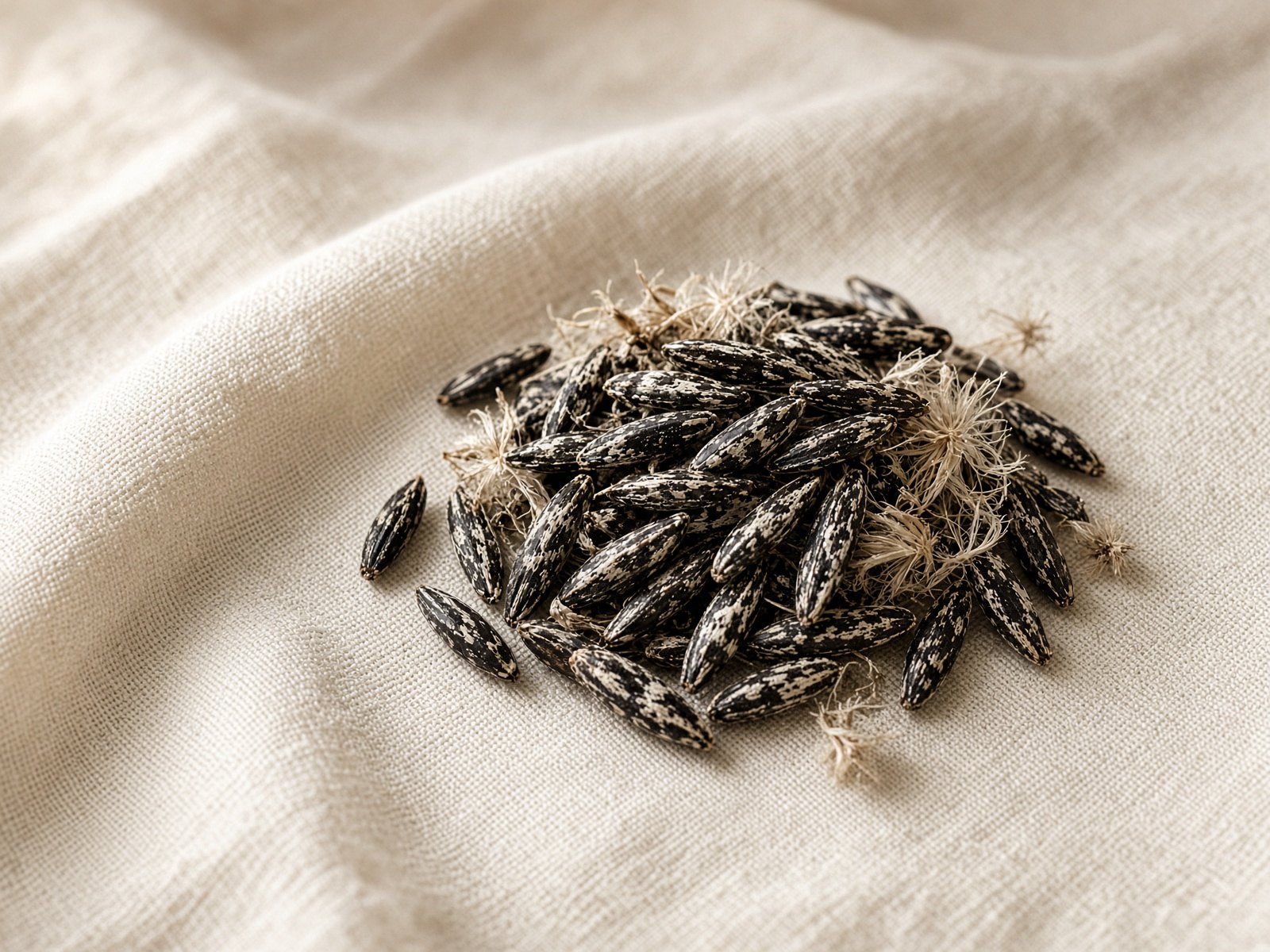
Asteraceae · fruit (seed)
Milk thistle
Silybum marianum
Fruit/seed extract (silymarin) is widely marketed for the liver. This catalog maps it as conflicting: some trials suggest enzyme or symptom changes; larger disease-outcome data are inconsistent.
Safety first
Seed extracts are usually well tolerated but Asteraceae allergy applies. Evidence that silymarin changes the course of liver disease is conflicting — do not use it in place of a hepatology workup.
Tradition vs trials
Traditional record. European tradition uses the seed for liver and gallbladder complaints. That history is not the same as proven disease modification.
Trial literature. Cochrane and NCCIH summaries find conflicting or insufficient evidence for chronic liver disease outcomes. Trial products (often silibinin-rich) are not identical to crude seed tea.
Practical ranges
Educational ranges — not a prescription. Culinary use is not an extract.
silymarin extract
Researched products often provide about 200–400 mg silymarin daily in divided doses; assays are not standardized across brands
ESCOP / NCCIH — Educational range only — not a prescription. A licensed clinician individualizes product, dose, and duration.
Pregnancy, nursing, children
- Pregnancy. Insufficient reliable data; avoid unless a clinician directs otherwise.
- Nursing. Insufficient reliable data; avoid unless a clinician directs otherwise.
- Children. Insufficient reliable data; avoid unless a clinician directs otherwise.
Contraindications
- Asteraceae allergy
- do not delay evaluation of jaundice, ascites, or acute hepatitis
Key interactions
- CYP / UGT substrates · note
In vitro inhibition signals exist; clinical interaction data are mixed and usually modest.