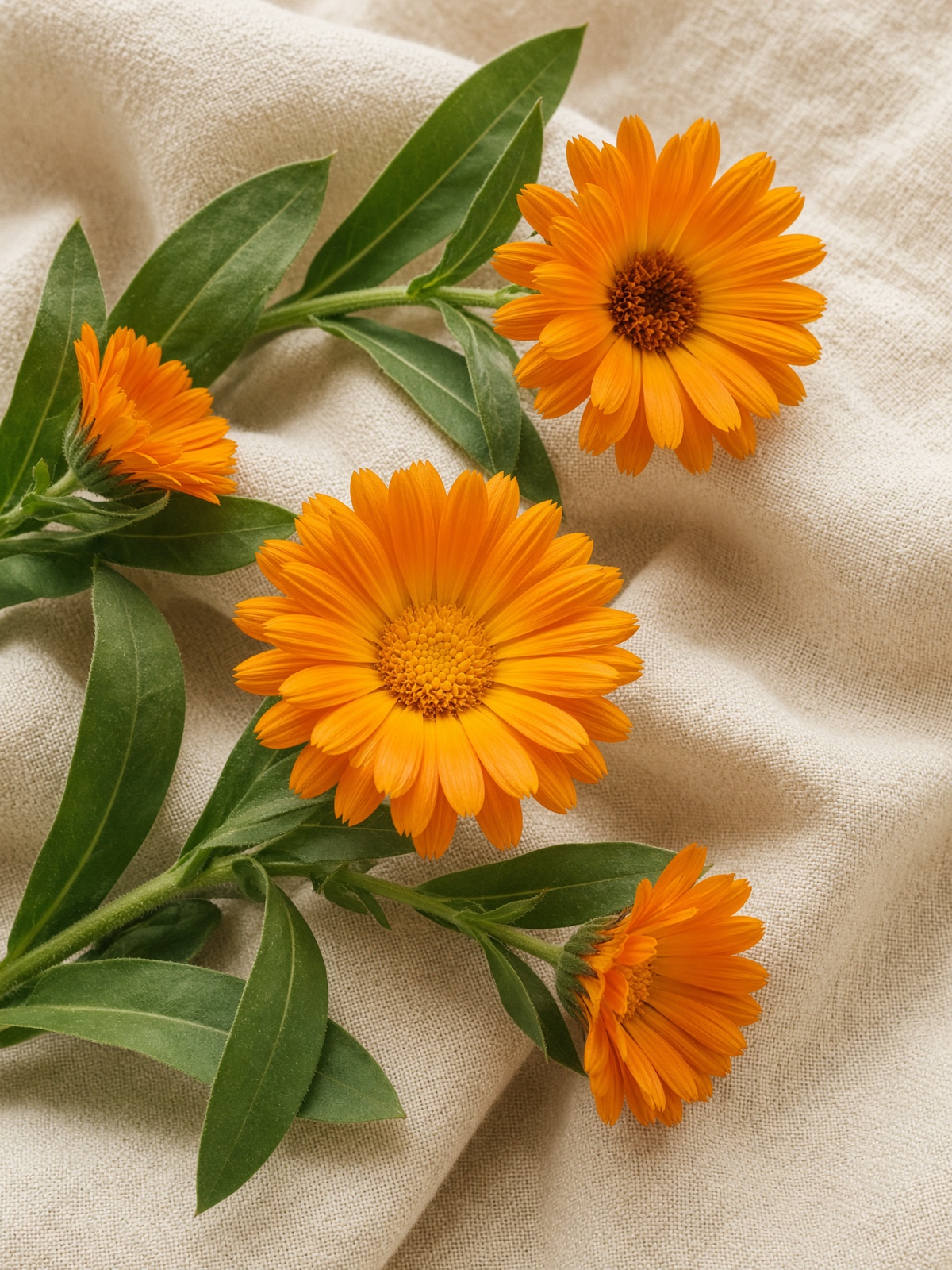
Asteraceae · flower
Calendula
Calendula officinalis
Flower mapped to modest human topical literature on minor wounds and as an emollient-adjacent wash.
Safety first
Asteraceae allergy can worsen dermatitis. Petals are food-like; concentrated alcohol extracts are not salad.
Tradition vs trials
Traditional record. European vulnerary and later Commission E external records.
Trial literature. Small human topical files exist. Not a substitute for tetanus, bite, or deep-wound care.
Practical ranges
Educational ranges — not a prescription. Culinary use is not an extract.
topical preparations
Ointments in monographs are often a few percent flower extract applied to minor skin; not a dosing protocol
ESCOP / EMA HMPC — Educational range only — not a prescription. A licensed clinician individualizes product, dose, and duration.
Pregnancy, nursing, children
- Pregnancy. Topical on intact skin is traditionally used; internal extracts lack adequate data.
- Nursing. Insufficient reliable data; avoid unless a clinician directs otherwise.
- Children. Insufficient reliable data; avoid unless a clinician directs otherwise.
Contraindications
- known Asteraceae allergy
- deep or infected wounds as sole care
Key interactions
- none specific topically · note
Allergy is the safety issue.
Used in these diagnoses
- Atopic dermatitis / eczemaSkin
- Mild psoriasisSkin
- Dry skinSkin
- Minor woundsSkin
- Minor burnsSkin
- Insect bites / stings (local)Skin
- Vulvovaginal candidiasis (adjunct)Women’s Health
- Anal fissure (supportive)Digestive
- Allergic contact dermatitisSkin
- Radiation dermatitis (adjunct)Skin
- Genitourinary syndrome of menopauseWomen’s Health