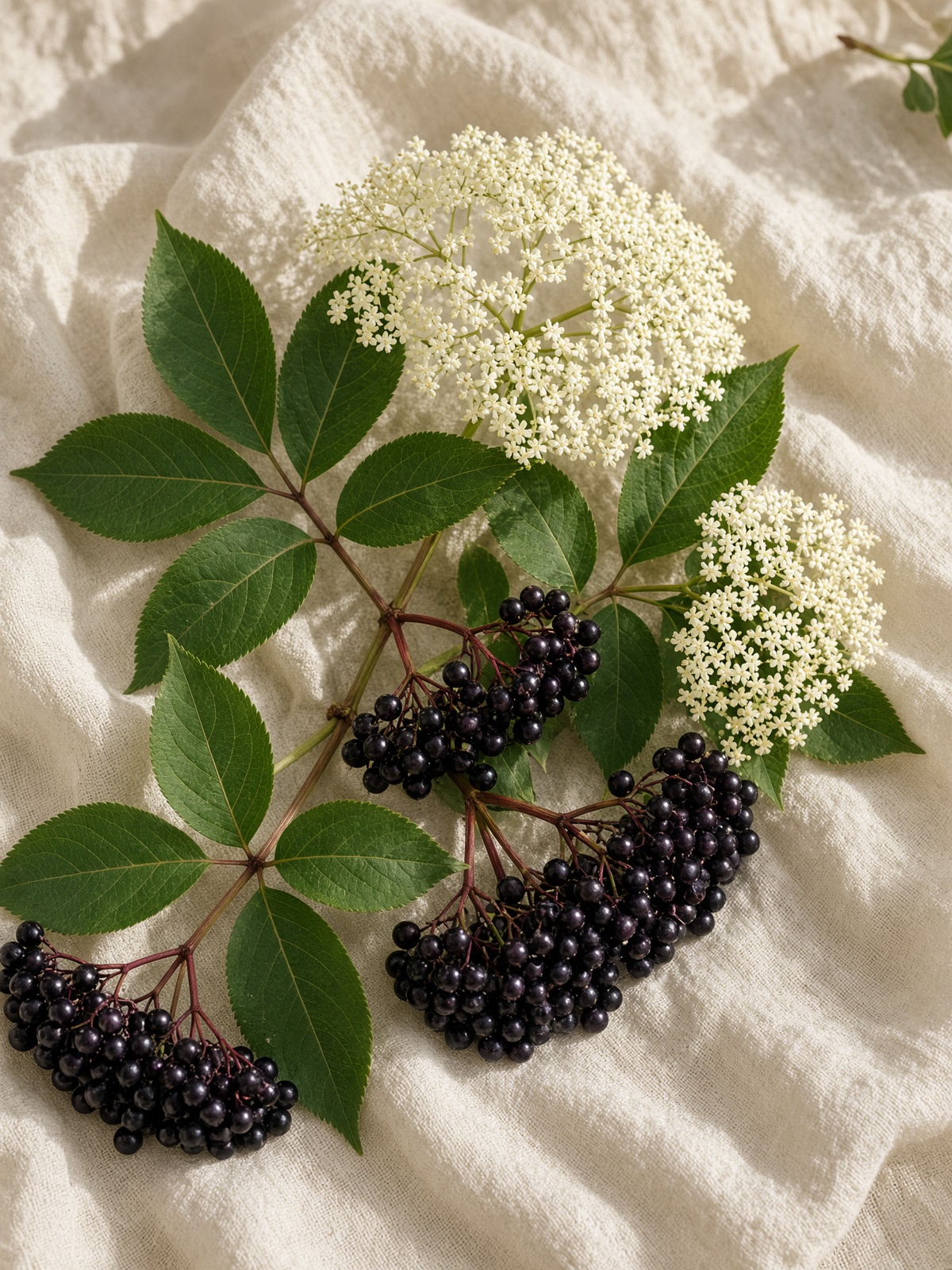
Viburnaceae · ripe berry, flower
Black elder
Sambucus nigra
Ripe berry extracts have some duration trials in seasonal URI. Flower is a traditional diaphoretic tea.
Safety first
Raw or unripe berries, stems, and leaves contain cyanogenic glycosides and can cause nausea and worse. Ripe cooked berry and flower are the catalog objects. Not a flu antiviral of record.
Tradition vs trials
Traditional record. European flower tea for feverish colds; berry as food and later extract.
Trial literature. Berry extracts have small human duration files. Influenza still needs a clinician in high-risk people.
Practical ranges
Educational ranges — not a prescription. Culinary use is not an extract.
berry extract
Trial products vary; this catalog does not copy a brand dose as a prescription
ESCOP / EMA HMPC — Educational range only — not a prescription. A licensed clinician individualizes product, dose, and duration.
Pregnancy, nursing, children
- Pregnancy. Culinary cooked ripe berry is food-like; concentrated extracts lack adequate pregnancy data.
- Nursing. Insufficient reliable data; avoid unless a clinician directs otherwise.
- Children. Insufficient reliable data; avoid unless a clinician directs otherwise.
Contraindications
- raw/unripe berry
- known Sambucus allergy
Key interactions
- immunosuppressants · note
Theoretical immune-activation folklore — evidence is thin.