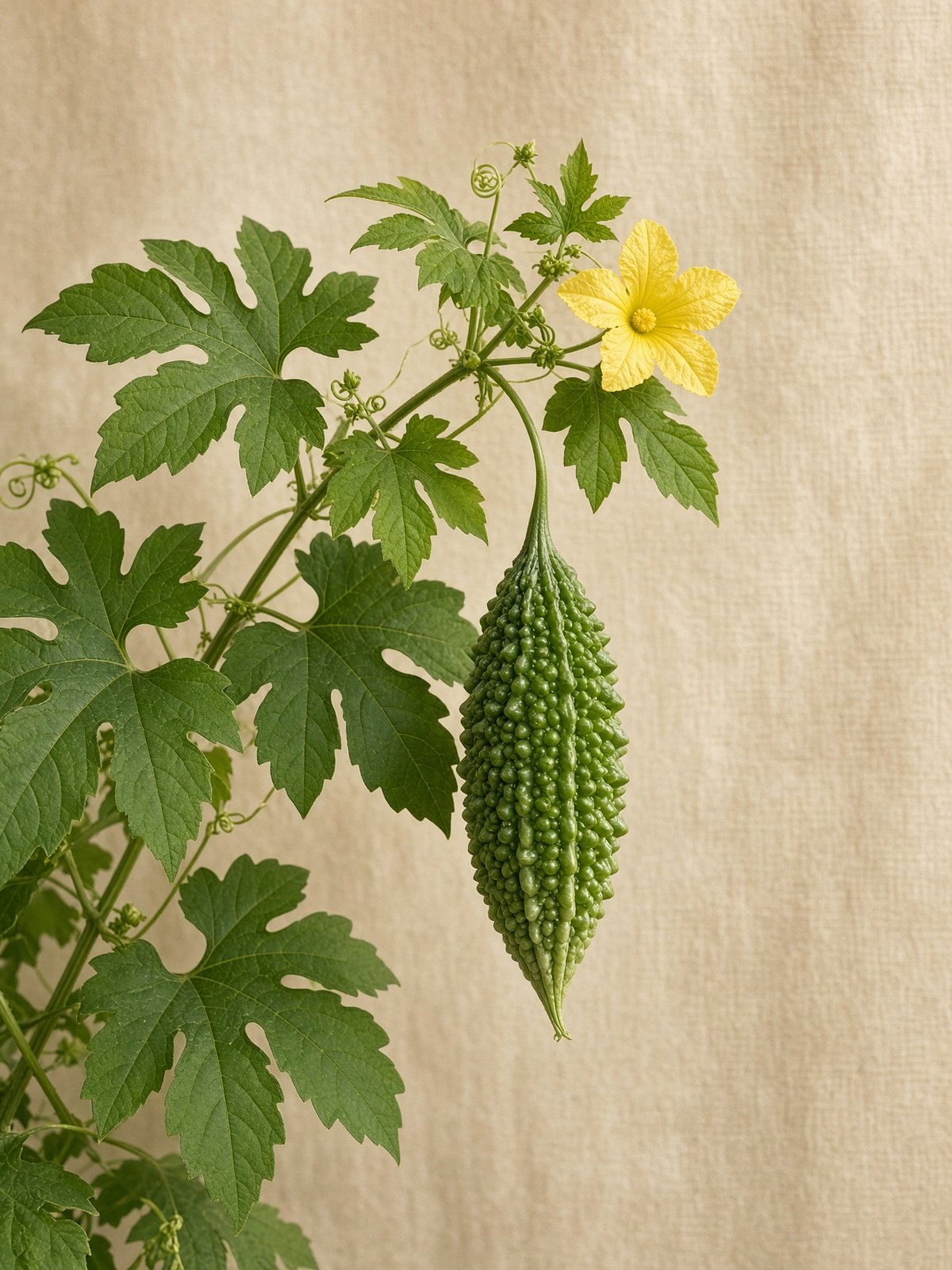
Cucurbitaceae · fruit, seed
Bitter melon
Momordica charantia
Bitter fruit mapped to human glycemic trials of mixed quality. Culinary stir-fry is not the same as standardized capsules.
Safety first
Fruit is a food in many cuisines but concentrated products have human glucose-lowering signals and a hypoglycemia risk with diabetes drugs. Seeds and unripe fruit have traditional abortifacient cautions — not a pregnancy food in medicinal amounts.
Tradition vs trials
Traditional record. Ayurvedic, Chinese (kugua), and Caribbean food-medicine traditions use the fruit as a bitter metabolic food.
Trial literature. Human trials of fruit juice, powder, and extracts on glucose are mixed in size and quality. Not a replacement for diabetes care.
Practical ranges
Educational ranges — not a prescription. Culinary use is not an extract.
fruit preparations
Trial products range from culinary fruit to several grams of dried powder or specified juices; no single official range. Food amounts are the conservative traditional range
WHO monographs — Educational range only — not a prescription. A licensed clinician individualizes product, dose, and duration.
Pregnancy, nursing, children
- Pregnancy. Avoid medicinal amounts. Traditional abortifacient cautions attach to seed and concentrated fruit.
- Nursing. Insufficient reliable data; avoid unless a clinician directs otherwise.
- Children. Culinary fruit in family food is one thing; juice and capsules are not pediatric by default. Hypoglycemia is the concern.
Contraindications
- pregnancy (medicinal use)
- G6PD caution in some traditional reports of seed products
- do not replace diabetes therapy
Key interactions
- insulin and oral antidiabetes drugs · caution
Additive hypoglycemia.