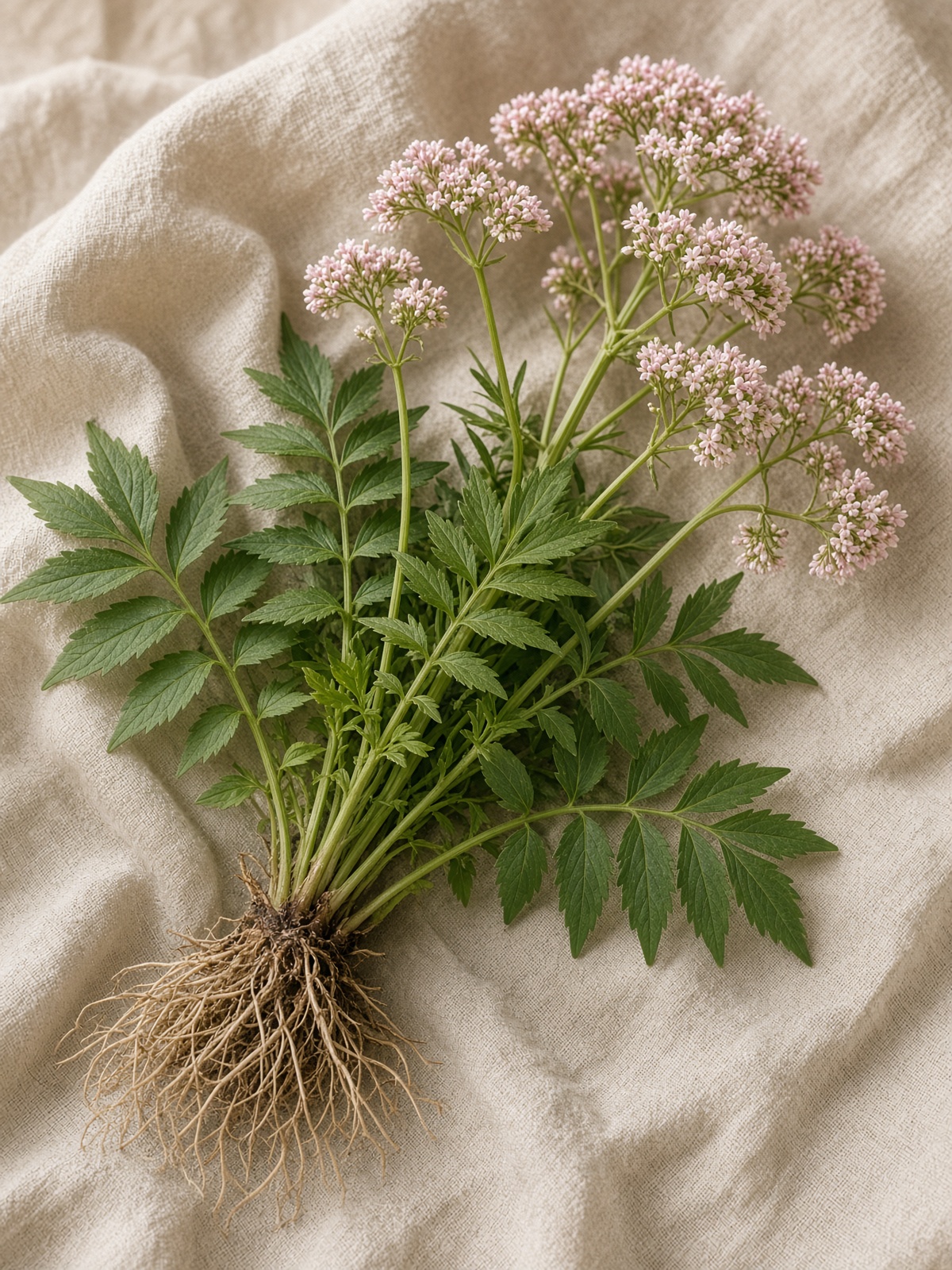
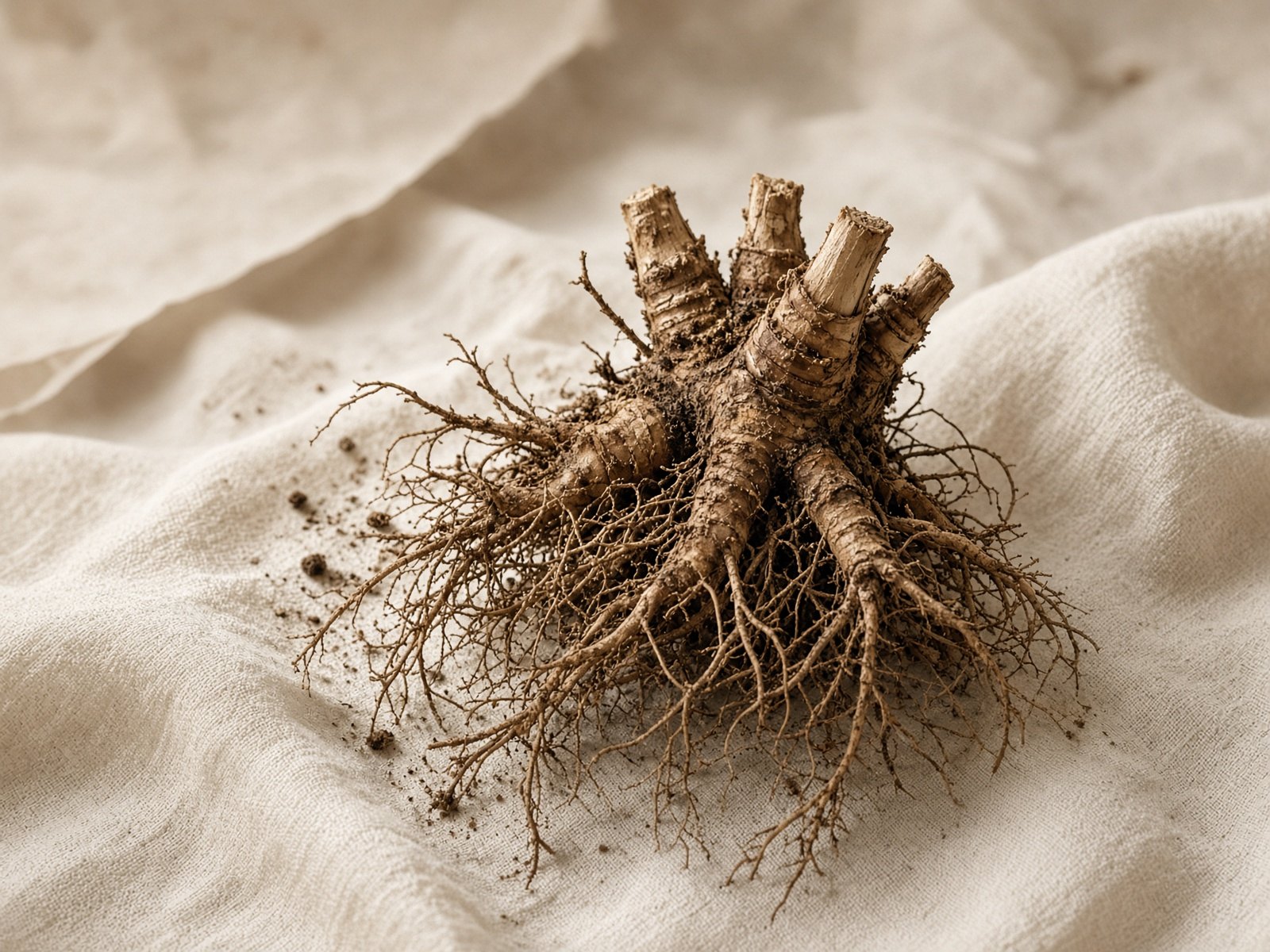
Caprifoliaceae · root, rhizome
Valerian
Valeriana officinalis
European root mapped to conflicting human sleep and anxiety trials. Smell and iridoid instability make products unequal.
Safety first
Root is a traditional sedative with conflicting sleep-trial results. Do not combine casually with alcohol, benzodiazepines, or other CNS depressants. Morning grogginess and vivid dreams are reported.
Tradition vs trials
Traditional record. Commission E and ESCOP record the root for restlessness and sleep disturbance based on tradition plus older human data.
Trial literature. Cochrane and later reviews find inconsistent sleep-onset and sleep-quality effects. Combination products (with hops or lemon balm) further confuse attribution.
Practical ranges
Educational ranges — not a prescription. Culinary use is not an extract.
dried root / extract
European monographs commonly list about 2–3 g root as tea, or equivalent extract, 30–60 minutes before bed
ESCOP / EMA HMPC — Educational range only — not a prescription. A licensed clinician individualizes product, dose, and duration.
Pregnancy, nursing, children
- Pregnancy. Insufficient reliable data; avoid unless a clinician directs otherwise.
- Nursing. Insufficient reliable data; avoid unless a clinician directs otherwise.
- Children. Insufficient reliable data; avoid unless a clinician directs otherwise.
Contraindications
- operating machinery until individual response is known
- known valerian allergy
Key interactions
- CNS depressants and alcohol · caution
Additive sedation is the practical risk even if trial effects are modest.