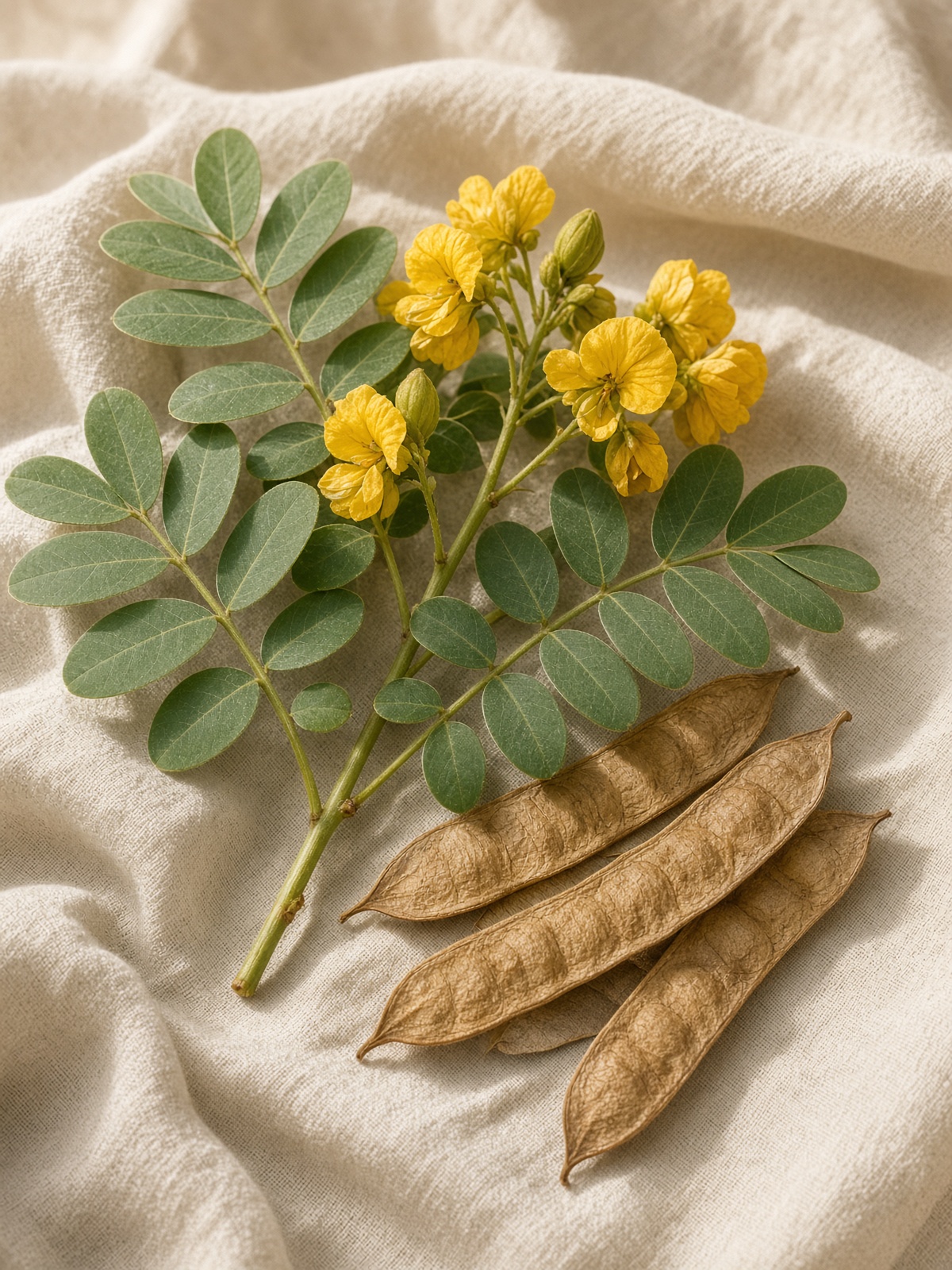
Fabaceae · leaflet, fruit (pod)
Senna
Senna alexandrina
Leaf and pod are mapped to well-documented stimulant-laxative pharmacology and short-term human use. European monographs strictly limit duration.
Safety first
Short-term stimulant laxative only. Chronic use risks electrolyte loss, dependence, and melanosis coli. Not a daily 'cleanse' and not for unexplained abdominal pain.
Tradition vs trials
Traditional record. Alexandrian and Tinnevelly senna have a long purgative record in Western, Unani, and Ayurvedic pharmacy.
Trial literature. Human bowel-prep and constipation trials confirm a stimulant effect. That is not evidence for chronic wellness use.
Practical ranges
Educational ranges — not a prescription. Culinary use is not an extract.
sennosides (adults, short-term)
European monographs typically list about 15–30 mg hydroxyanthracene glycosides (as sennoside B) at bedtime, generally not beyond 1–2 weeks
EMA HMPC / German Commission E — Educational range only — not a prescription. A licensed clinician individualizes product, dose, and duration.
Pregnancy, nursing, children
- Pregnancy. Avoid unless a clinician directs a short-term stimulant laxative. Osmotic or bulk options are usually considered first.
- Nursing. Anthraquinones can appear in milk; European monographs advise against routine nursing use unless a clinician directs otherwise.
- Children. Not for children unless a clinician directs a specific product and duration. Infants are excluded.
Contraindications
- ileus or bowel obstruction
- acute inflammatory bowel disease flares
- undiagnosed abdominal pain
- severe dehydration
- chronic daily self-use
Key interactions
- diuretics / digoxin / corticosteroids · avoid
Potassium loss potentiates arrhythmia and digoxin toxicity.