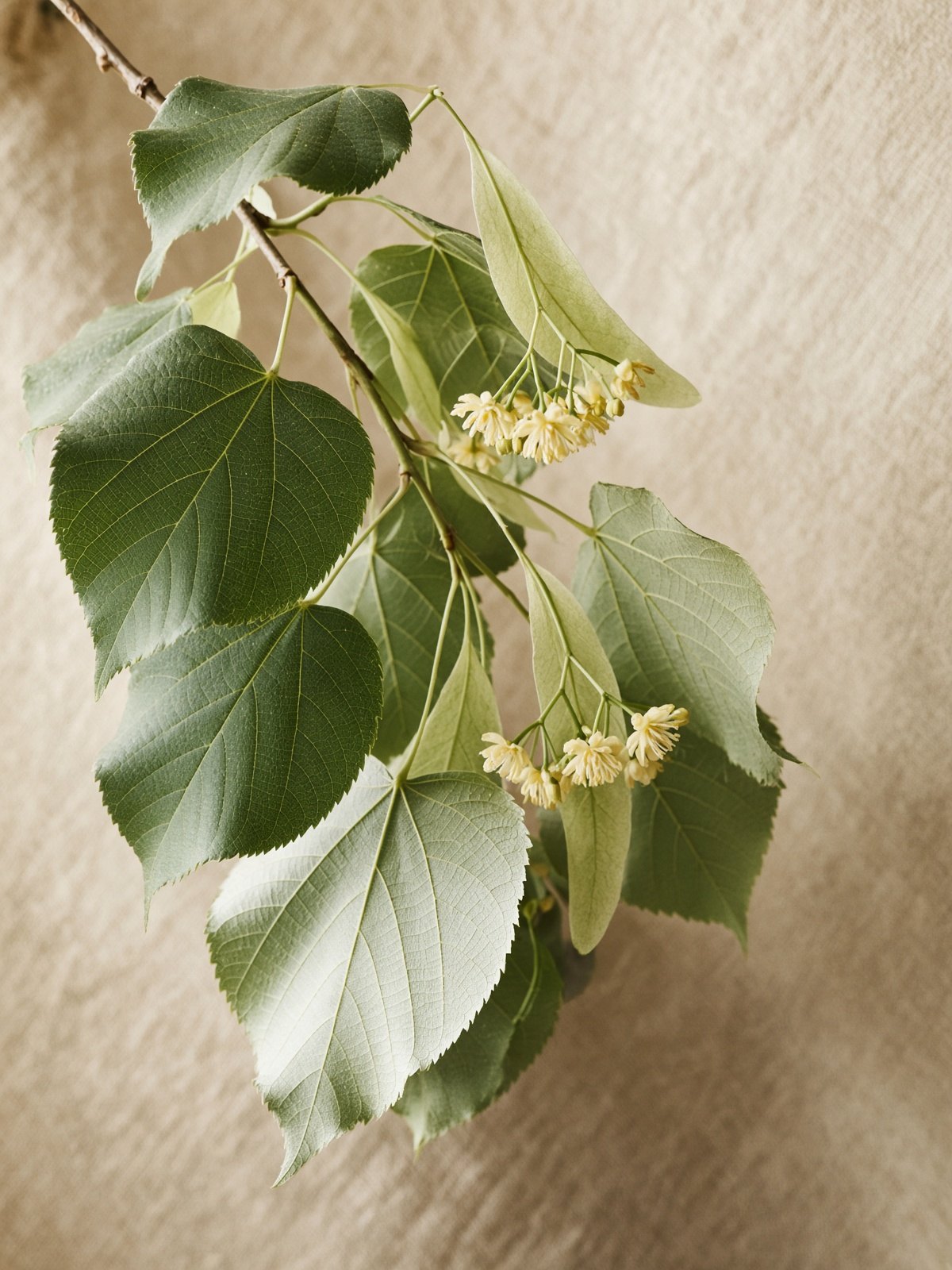
Malvaceae · flower
Linden
Tilia cordata
Flower mapped as a traditional mild nervine and diaphoretic for restlessness and feverish colds.
Safety first
Flower tea is food-like for most people. Frequent use of some Tilia teas has old cardiac-folklore cautions that are poorly substantiated — still not a heart-failure tea. Bracts and flowers, not wood.
Tradition vs trials
Traditional record. European lime-blossom. Commission E recorded cold and restlessness-type language.
Trial literature. Modern RCTs are sparse. Traditional evidence tag is honest.
Practical ranges
Educational ranges — not a prescription. Culinary use is not an extract.
flower
Commission E-type infusions often a few grams of flower per cup, several times daily as a traditional cold tea
ESCOP / German Commission E — Educational range only — not a prescription. A licensed clinician individualizes product, dose, and duration.
Pregnancy, nursing, children
- Pregnancy. Traditional teas lack robust data; culinary-strength occasional use is often treated as food-like — still a clinician question in pregnancy.
- Nursing. Insufficient reliable data; avoid unless a clinician directs otherwise.
- Children. Traditional pediatric cold tea in Europe; febrile infants still need a clinician.
Contraindications
- known Tilia allergy
Key interactions
- sedatives · note
Theoretical additive mild sedation.