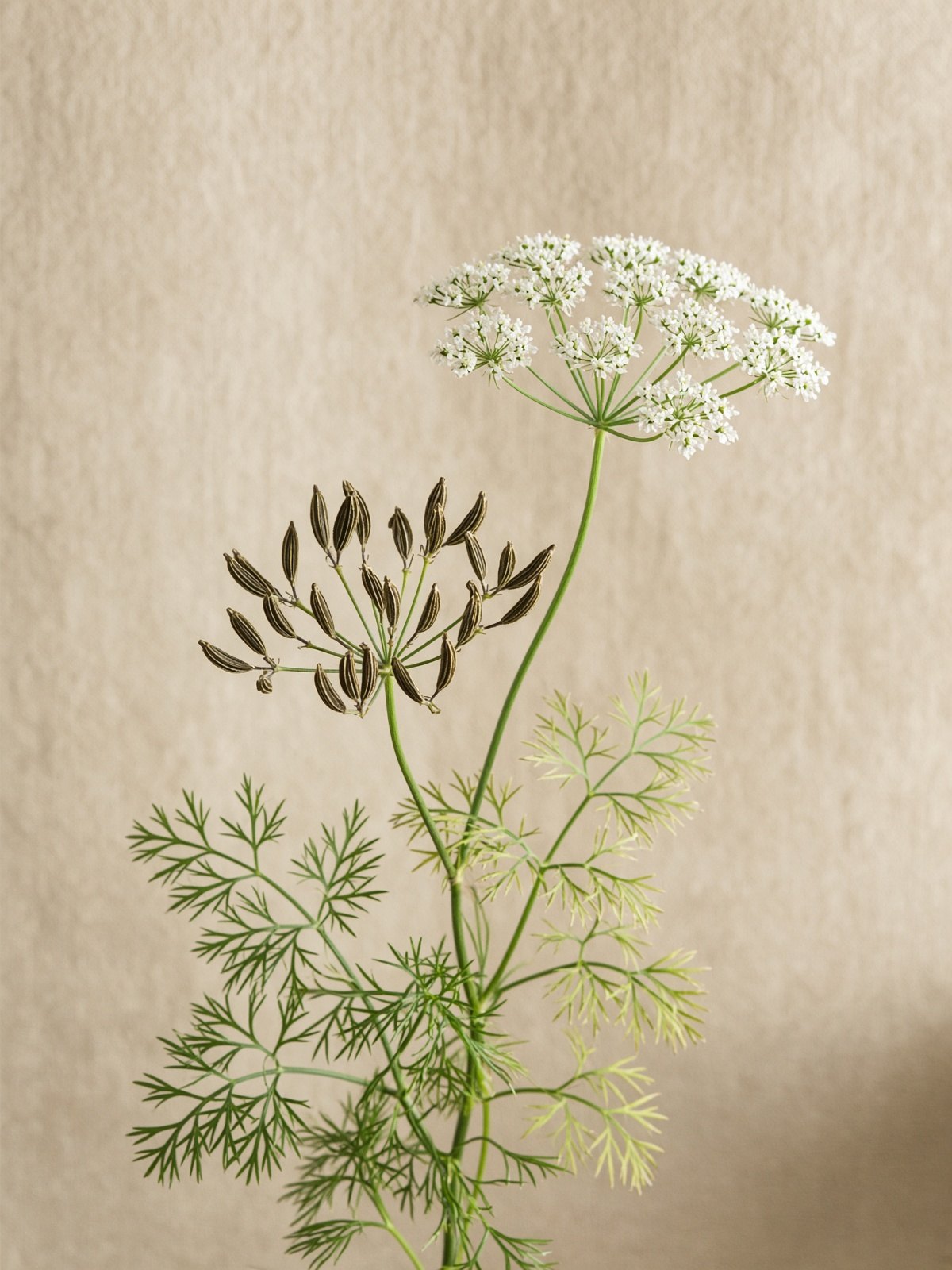
Apiaceae · fruit (seed), essential oil
Caraway
Carum carvi
Dried fruit mapped as a European carminative. Human evidence is largely combination-oil trials for functional dyspepsia.
Safety first
Culinary fruit is food-like. Most human dyspepsia trials use a fixed combination with peppermint oil, not caraway tea alone.
Tradition vs trials
Traditional record. Commission E and ESCOP record the fruit for dyspepsia and flatulence, often beside fennel and peppermint.
Trial literature. Adult trials of peppermint-plus-caraway enteric oils report dyspepsia symptom changes. Standalone caraway tea is less studied.
Practical ranges
Educational ranges — not a prescription. Culinary use is not an extract.
dried fruit
European monographs commonly list about 1.5–6 g fruit daily as tea or equivalent
ESCOP / German Commission E — Educational range only — not a prescription. A licensed clinician individualizes product, dose, and duration.
Pregnancy, nursing, children
- Pregnancy. Culinary seed is food-like; concentrated oil lacks adequate pregnancy data.
- Nursing. Culinary seed is food-like; concentrated oil lacks adequate lactation data.
- Children. Culinary seed in food is common; medicinal oils are not pediatric by default.
Contraindications
- known Apiaceae allergy
- liver disease caution for concentrated oils (monograph language)
Key interactions
- generally low at culinary doses · note
Combination oils share peppermint's heartburn and enteric-coat issues.