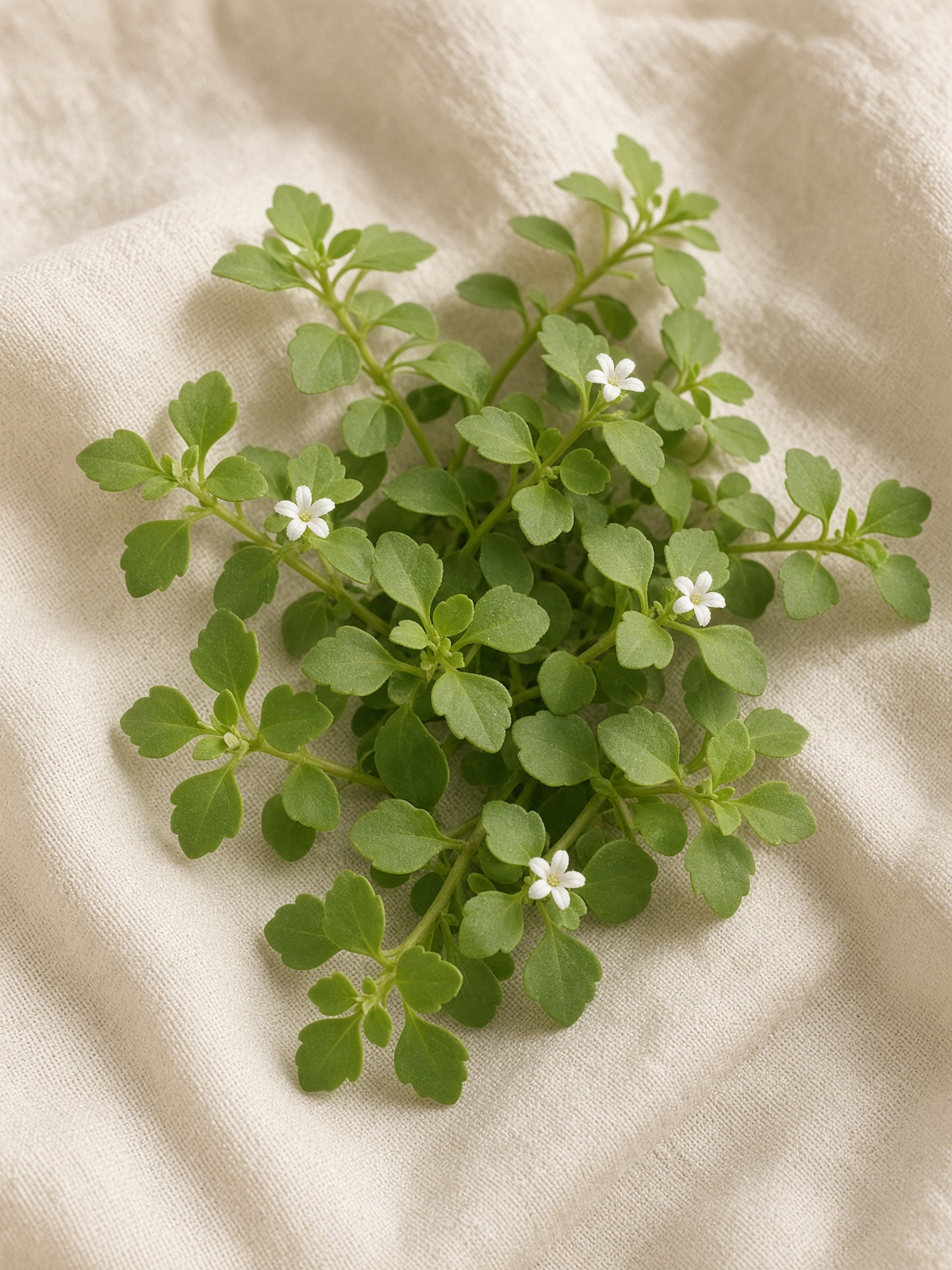
Plantaginaceae · aerial parts
Brahmi
Bacopa monnieri
Ayurvedic medhya herb mapped to human memory- and attention-related trials of bacoside-standardized extracts. GI intolerance is the usual limiting effect.
Safety first
Herb has human cognition trials, usually after weeks of use. Nausea and diarrhea are common. Name confusion with Centella (also called brahmi in some regions) is a real identity problem.
Tradition vs trials
Traditional record. API and classical texts use brahmi for medhya (intellect) support. Regional naming overlap with mandukaparni (gotu kola) must be resolved on the label.
Trial literature. Several RCTs report delayed (often 8–12 week) changes on memory subscales. Acute nootropic claims are not what the trials show.
Practical ranges
Educational ranges — not a prescription. Culinary use is not an extract.
standardized extract
Cognition trials often use about 300–450 mg/day of bacoside-standardized extract for 8–12 weeks; crude-herb traditional amounts differ
Ayurvedic Pharmacopoeia of India (API) — Educational range only — not a prescription. A licensed clinician individualizes product, dose, and duration.
Pregnancy, nursing, children
- Pregnancy. Insufficient reliable data; avoid unless a clinician directs otherwise.
- Nursing. Insufficient reliable data; avoid unless a clinician directs otherwise.
- Children. Insufficient reliable data; avoid unless a clinician directs otherwise.
Contraindications
- known Bacopa allergy
- active peptic symptoms that worsen with bitters
Key interactions
- cholinergic / anticholinergic drugs · note
Theoretical pharmacodynamic conflict; clinical reports are sparse.
- thyroid hormone · note
Animal thyroid-stimulating signals; human relevance unclear.