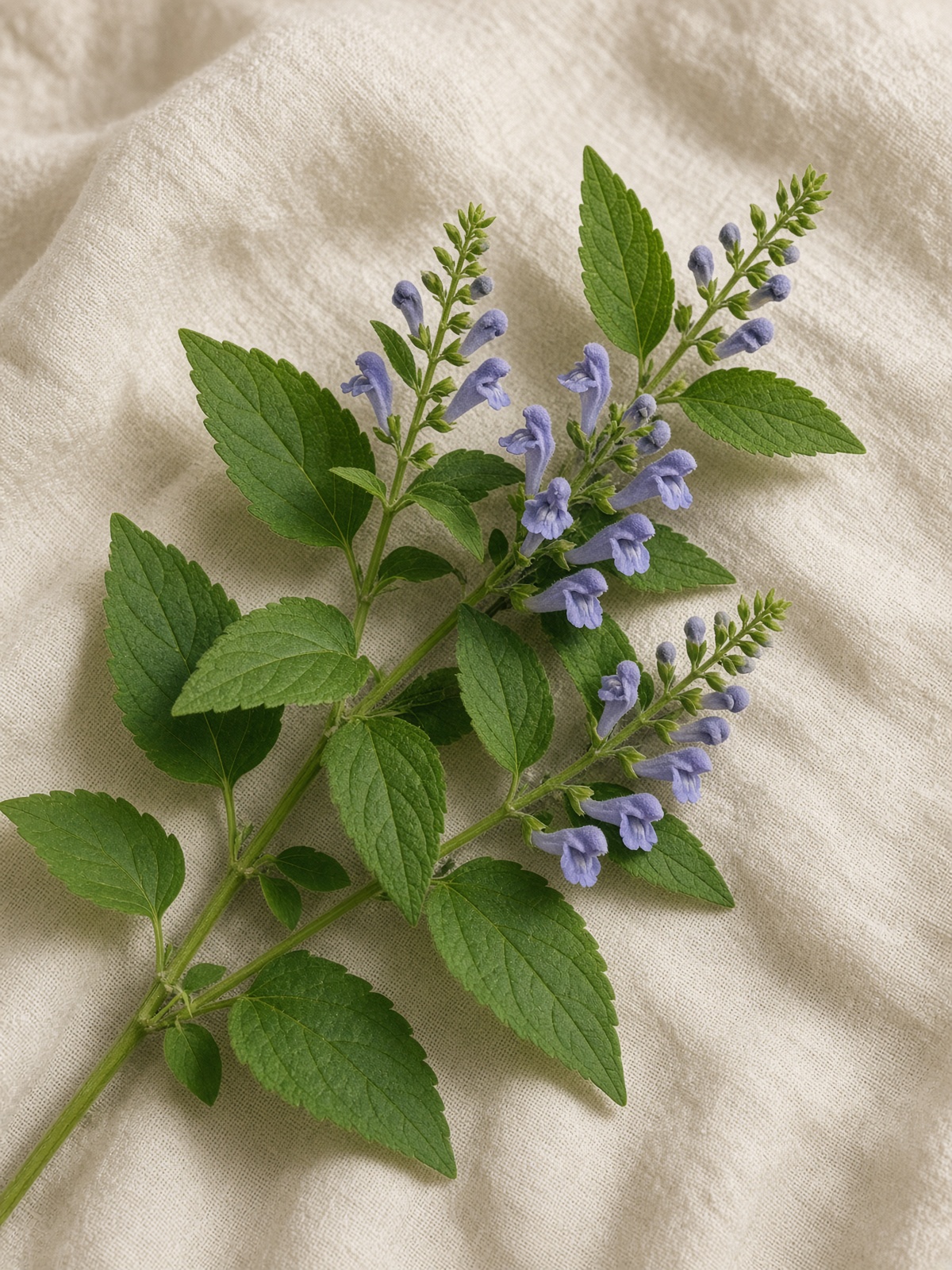
Lamiaceae · aerial parts
Skullcap
Scutellaria lateriflora
Aerial parts mapped as a traditional nervine. Human trials are almost absent. Adulteration history is the dominant safety story.
Safety first
True S. lateriflora is a traditional North American nervine. Historical liver injuries were linked to germander (Teucrium) adulteration, not proven skullcap pharmacology. Buy identity-tested herb only.
Tradition vs trials
Traditional record. Eclectic physicians used skullcap for restlessness. It is not interchangeable with Chinese huang qin (S. baicalensis root).
Trial literature. Clinical literature is minimal. Do not import baicalin-root trial data onto this species or part.
Practical ranges
Educational ranges — not a prescription. Culinary use is not an extract.
aerial parts
No reliable official European range. Traditional Western tincture and tea use is short-term nervine dosing — not a trial range
AHP — Educational range only — not a prescription. A licensed clinician individualizes product, dose, and duration.
Pregnancy, nursing, children
- Pregnancy. Insufficient reliable data; avoid unless a clinician directs otherwise.
- Nursing. Insufficient reliable data; avoid unless a clinician directs otherwise.
- Children. Insufficient reliable data; avoid unless a clinician directs otherwise.
Contraindications
- unidentified 'skullcap' products (germander risk)
- known mint-family allergy
Key interactions
- CNS depressants · caution
Additive sedation is the conservative assumption.