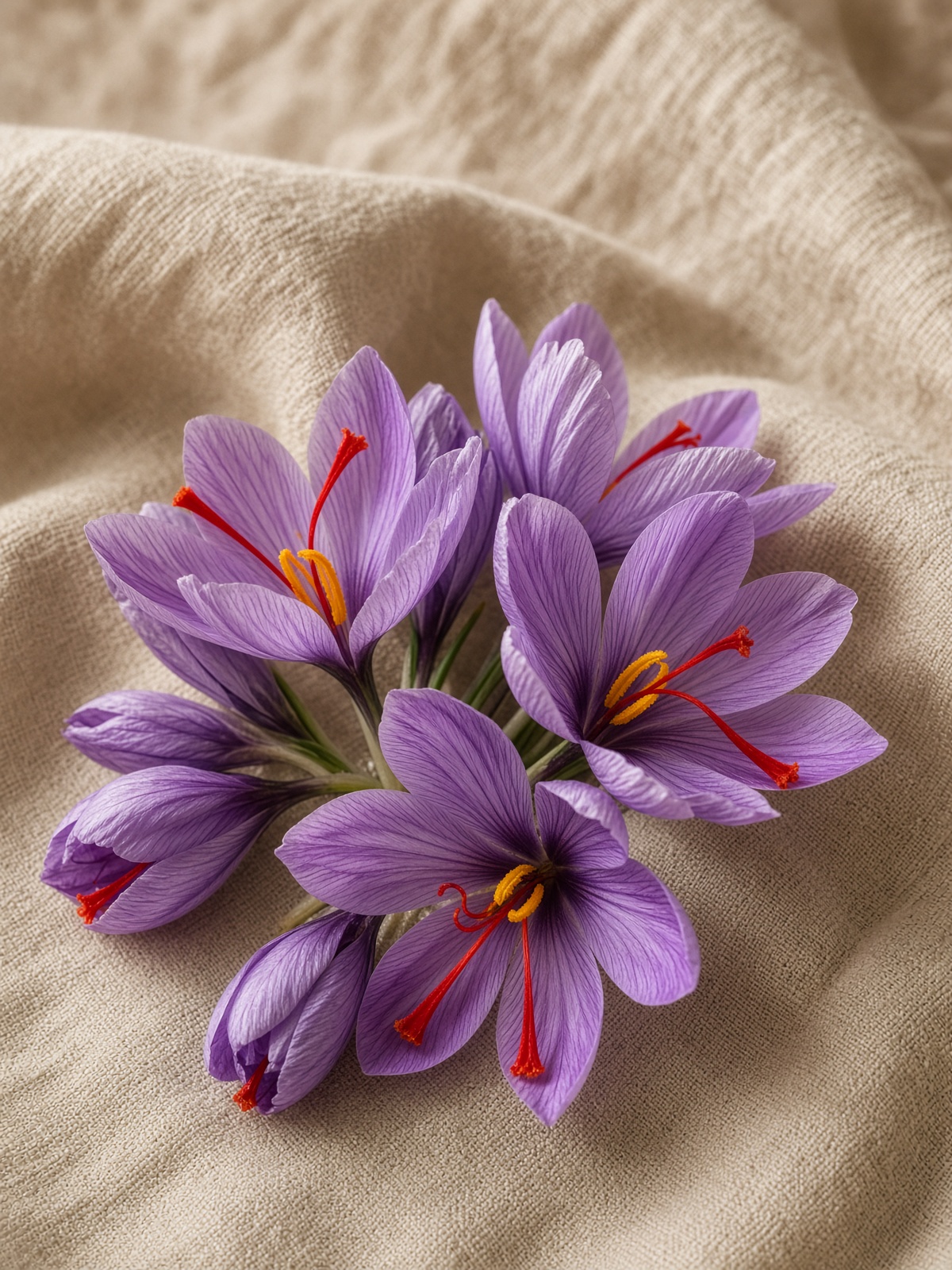
Iridaceae · stigma
Saffron
Crocus sativus
Stigma mapped to small human mood and PMS-related trials. Culinary pinches are food-like; gram-level doses are not.
Safety first
Stigma is a costly spice; high doses are traditionally abortifacient and can be toxic. Adulteration (dyed styles, gardenia, safflower) is the rule in cheap material. Mood-trial capsules are not a handful of culinary threads.
Tradition vs trials
Traditional record. Persian, Ayurvedic (kesar), and later European records use saffron as an aromatic nervine and emmenagogue. TCM uses a related but not identical 'fan hong hua' trade name.
Trial literature. Small RCTs report depressive-symptom and PMS-scale changes at ~30 mg/day of stigma extract. Samples are small; products are expensive and often adulterated.
Practical ranges
Educational ranges — not a prescription. Culinary use is not an extract.
stigma extract (adults)
Mood trials commonly use about 30 mg/day of a defined stigma extract; culinary use is a few threads. Gram doses are in the traditional toxicity/emmenagogue range and are not used
NCCIH — Educational range only — not a prescription. A licensed clinician individualizes product, dose, and duration.
Pregnancy, nursing, children
- Pregnancy. Avoid medicinal amounts. Culinary coloring amounts are traditional food use; extracts are not.
- Nursing. Insufficient reliable data; avoid unless a clinician directs otherwise.
- Children. Insufficient reliable data; avoid unless a clinician directs otherwise.
Contraindications
- pregnancy (medicinal use)
- bipolar-spectrum caution (activation in some reports)
Key interactions
- antidepressants · caution
Theoretical serotonergic stacking; clinical reports are limited.
- anticoagulants · note
Theoretical bleeding signal at high dose.