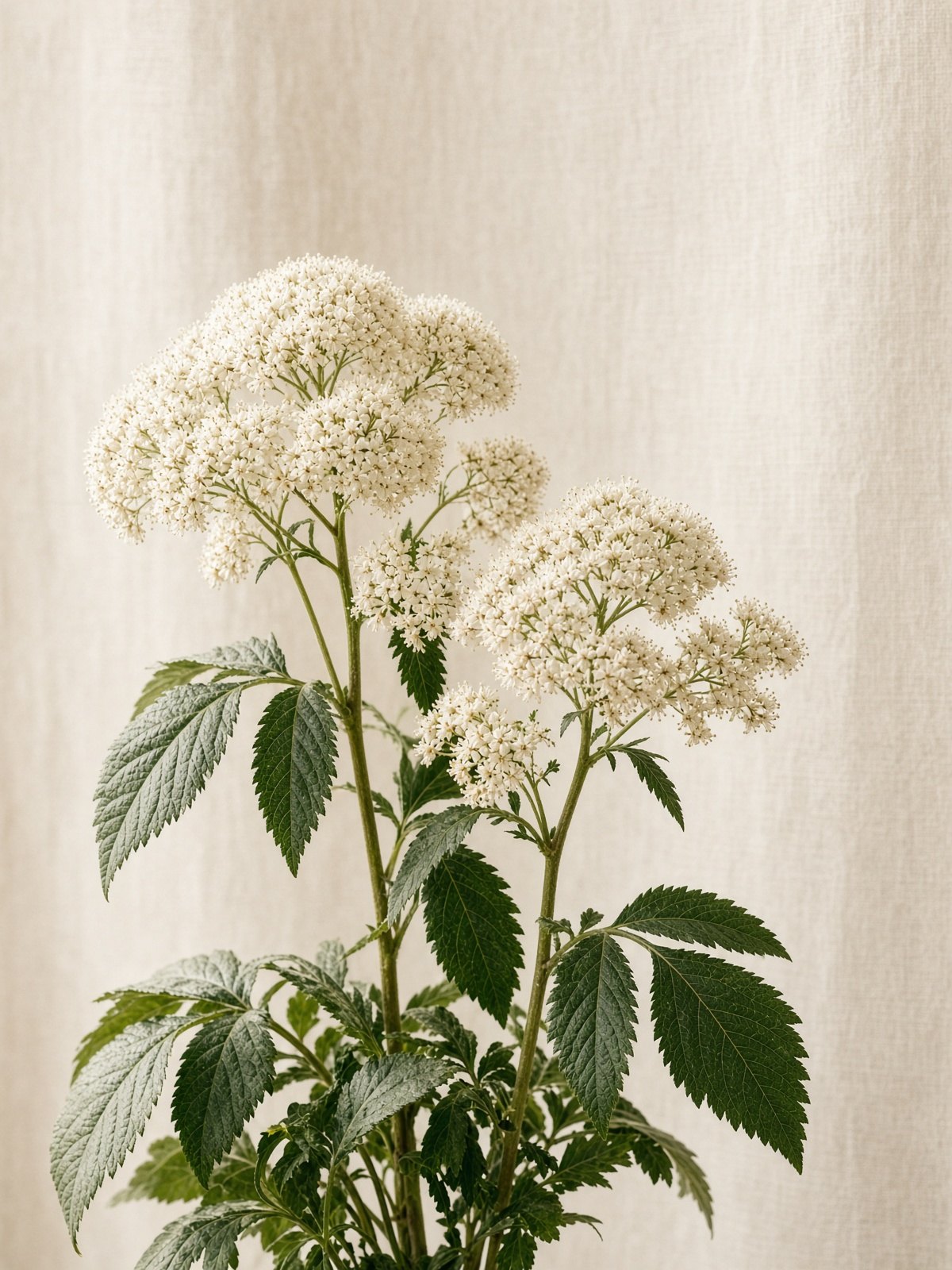
Rosaceae · flower, herb
Meadowsweet
Filipendula ulmaria
Flower/herb mapped as a traditional salicylate astringent. Not a replacement for aspirin cardioprotection — and not free of salicylate risk.
Safety first
Contains salicylate-like compounds. Treat with aspirin-class cautions: bleeding, Reye-type concern in children with viral illness, NSAID allergy, third-trimester pregnancy. Not 'herbal aspirin-free'.
Tradition vs trials
Traditional record. European fever-and-rheumatism folklore. Source-plant neighborhood of salicylic-acid history.
Trial literature. Modern RCTs are sparse. Safety class is the reason it is in the anticoagulant map.
Practical ranges
Educational ranges — not a prescription. Culinary use is not an extract.
herb
Traditional teas; no well-standardized aspirin-equivalent range — do not dose it as aspirin
ESCOP / German Commission E — Educational range only — not a prescription. A licensed clinician individualizes product, dose, and duration.
Pregnancy, nursing, children
- Pregnancy. Avoid, especially third trimester.
- Nursing. Avoid medicinal salicylate herbs.
- Children. Do not use in children or teenagers with viral illness (Reye-type caution).
Contraindications
- aspirin/NSAID allergy
- children with viral illness
- third-trimester pregnancy
Key interactions
- anticoagulants / antiplatelets / NSAIDs · caution
Additive bleeding and gastric-irritation risk.