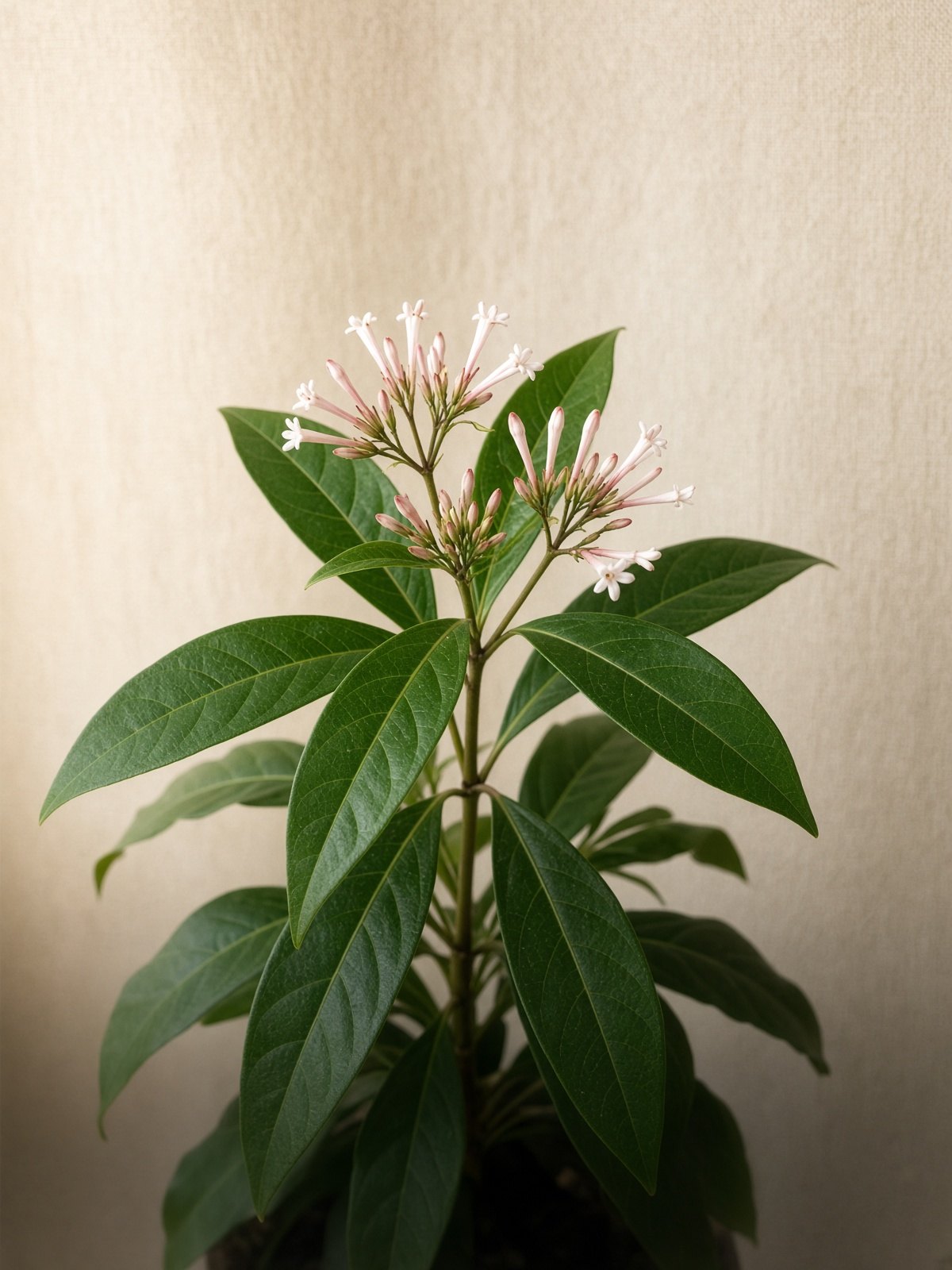
Apocynaceae · root
Indian snakeroot
Rauvolfia serpentina
The plant that became a drug (reserpine). In this catalog as a toxicity-adjacent restricted entry next to hypertension mappings.
Safety first
Reserpine source. Historical antihypertensive. Depression, Parkinsonism, nasal congestion, and peptic-ulcer cautions. Professional only — listed so nobody forages it as a blood-pressure tea.
This entry exists so you do not use the plant casually. It is not a treatment suggestion.
Tradition vs trials
Traditional record. Ayurvedic sarpagandha. 20th-century Western medicine isolated reserpine; the drug, not the root tea, is the historical object.
Trial literature. Reserpine has human antihypertensive data and a psychiatric adverse-effect file. Unstandardized root is not that tablet.
Practical ranges
Educational ranges — not a prescription. Culinary use is not an extract.
root
This catalog will not present a DIY hypotensive range
WHO monographs / historical reserpine labels — Educational range only — not a prescription. A licensed clinician individualizes product, dose, and duration.
Pregnancy, nursing, children
- Pregnancy. Avoid.
- Nursing. Avoid (alkaloids).
- Children. Not a pediatric plant.
Contraindications
- depression
- Parkinsonism
- unsupervised blood-pressure use
- active peptic ulcer in classical reserpine cautions
Key interactions
- MAOIs / other antihypertensives / levodopa · avoid
Depression, hypotension, and Parkinson-drug disruption.