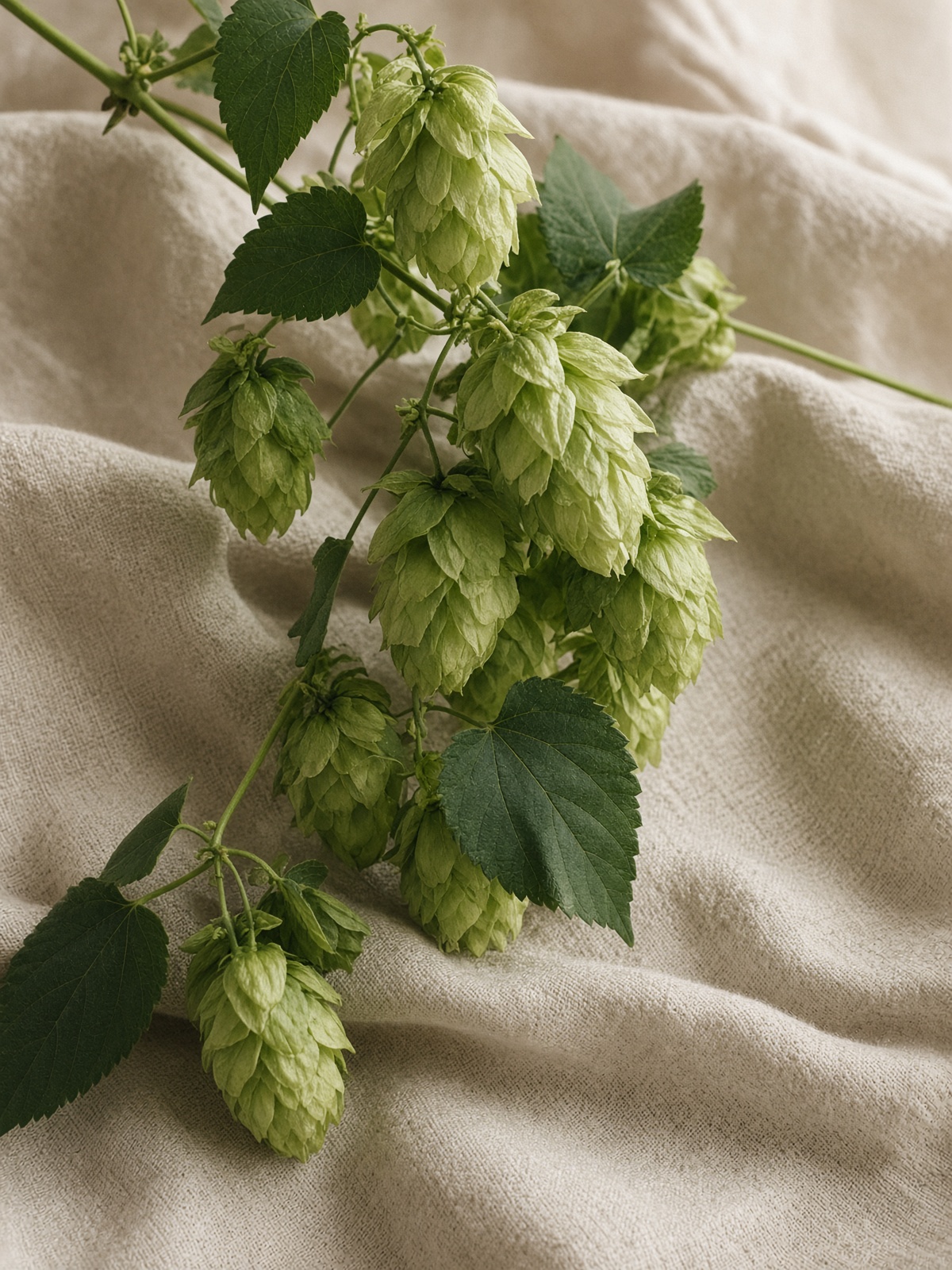
Cannabaceae · strobile (female inflorescence)
Hops
Humulus lupulus
Female cones mapped as a traditional sedative, often paired with valerian. Standalone human sleep evidence is limited.
Safety first
Strobiles are a traditional evening nervine and beer bitter. Concentrated extracts have phytoestrogen discussion and can add to sedation. Allergy to Cannabaceae is relevant.
Tradition vs trials
Traditional record. Commission E records hops for mood disturbances and sleep. Brewing use is culinary; medicinal extracts are more concentrated.
Trial literature. Most human sleep data are combination products with valerian. This catalog keeps the evidence tag traditional.
Practical ranges
Educational ranges — not a prescription. Culinary use is not an extract.
dried strobiles
Commission E-type ranges are often 0.5 g as a single dose or 1–2 g/day; combination products dominate the market
German Commission E / ESCOP — Educational range only — not a prescription. A licensed clinician individualizes product, dose, and duration.
Pregnancy, nursing, children
- Pregnancy. Insufficient reliable data; avoid unless a clinician directs otherwise.
- Nursing. Insufficient reliable data; avoid unless a clinician directs otherwise.
- Children. Insufficient reliable data; avoid unless a clinician directs otherwise.
Contraindications
- known Cannabaceae allergy
- hormone-sensitive disease — clinician decision for concentrated extracts
Key interactions
- CNS depressants · caution
Additive sedation.
- hormone-sensitive contexts · note
8-prenylnaringenin is a potent phytoestrogen in vitro; clinical extract relevance is uncertain but worth a caution.