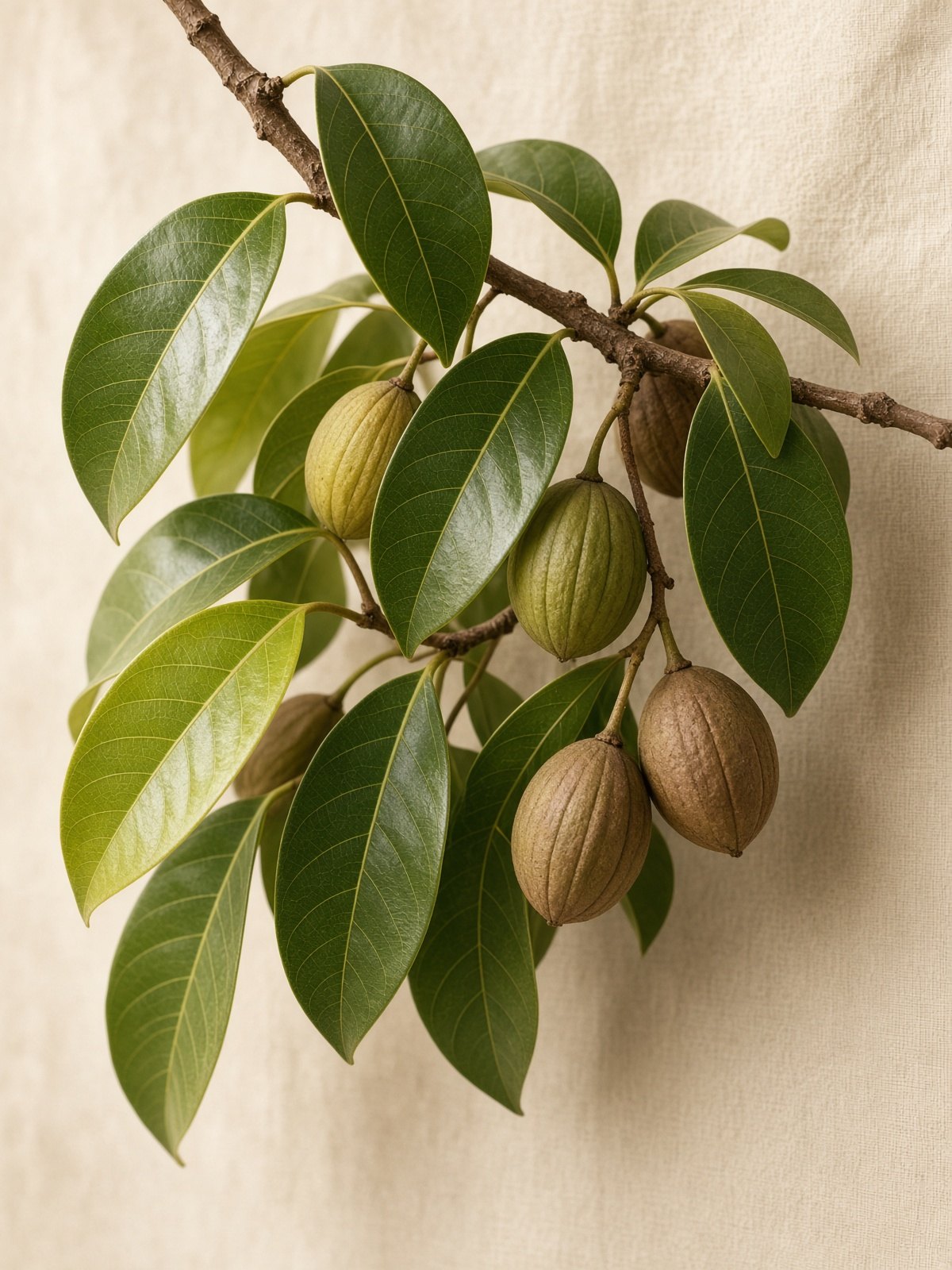
Combretaceae · fruit rind
Haritaki
Terminalia chebula
One-third of triphala, mapped as a traditional lower-GI and rasayana fruit. Human standalone trials are limited.
Safety first
Fruit rind is astringent at lower traditional amounts and a laxative at higher ones. Not a casual daily 'detox.' Quality of Terminalia fruits is uneven.
Tradition vs trials
Traditional record. API records haritaki as a premier rasayana with a dose-dependent bowel effect. Classical texts vary the preparation by intended effect.
Trial literature. Triphala trials exist but do not isolate haritaki. Standalone human evidence is traditional-plus-small-studies, tagged traditional here.
Practical ranges
Educational ranges — not a prescription. Culinary use is not an extract.
fruit rind powder
API-type traditional adult ranges are often 3–6 g, with higher traditional purgative amounts reserved for clinician-directed use
Ayurvedic Pharmacopoeia of India (API) — Educational range only — not a prescription. A licensed clinician individualizes product, dose, and duration.
Pregnancy, nursing, children
- Pregnancy. Insufficient reliable data; avoid unless a clinician directs otherwise.
- Nursing. Insufficient reliable data; avoid unless a clinician directs otherwise.
- Children. Insufficient reliable data; avoid unless a clinician directs otherwise.
Contraindications
- undiagnosed abdominal pain or obstruction
- chronic self-purgation
- known Terminalia allergy
Key interactions
- oral drugs / iron · caution
Tannins can reduce absorption if taken simultaneously.
- stimulant laxatives · caution
Additive catharsis at higher traditional amounts.