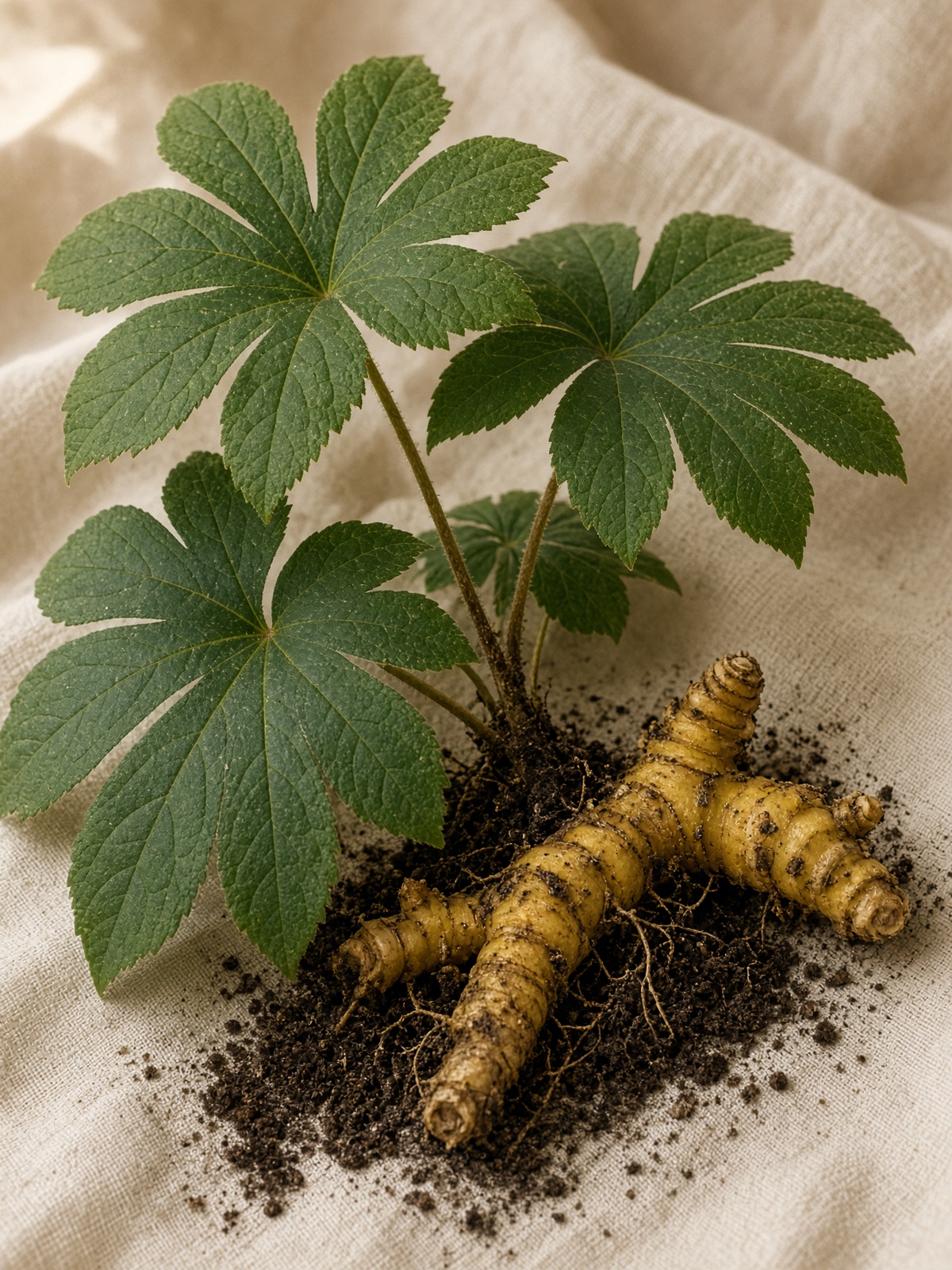
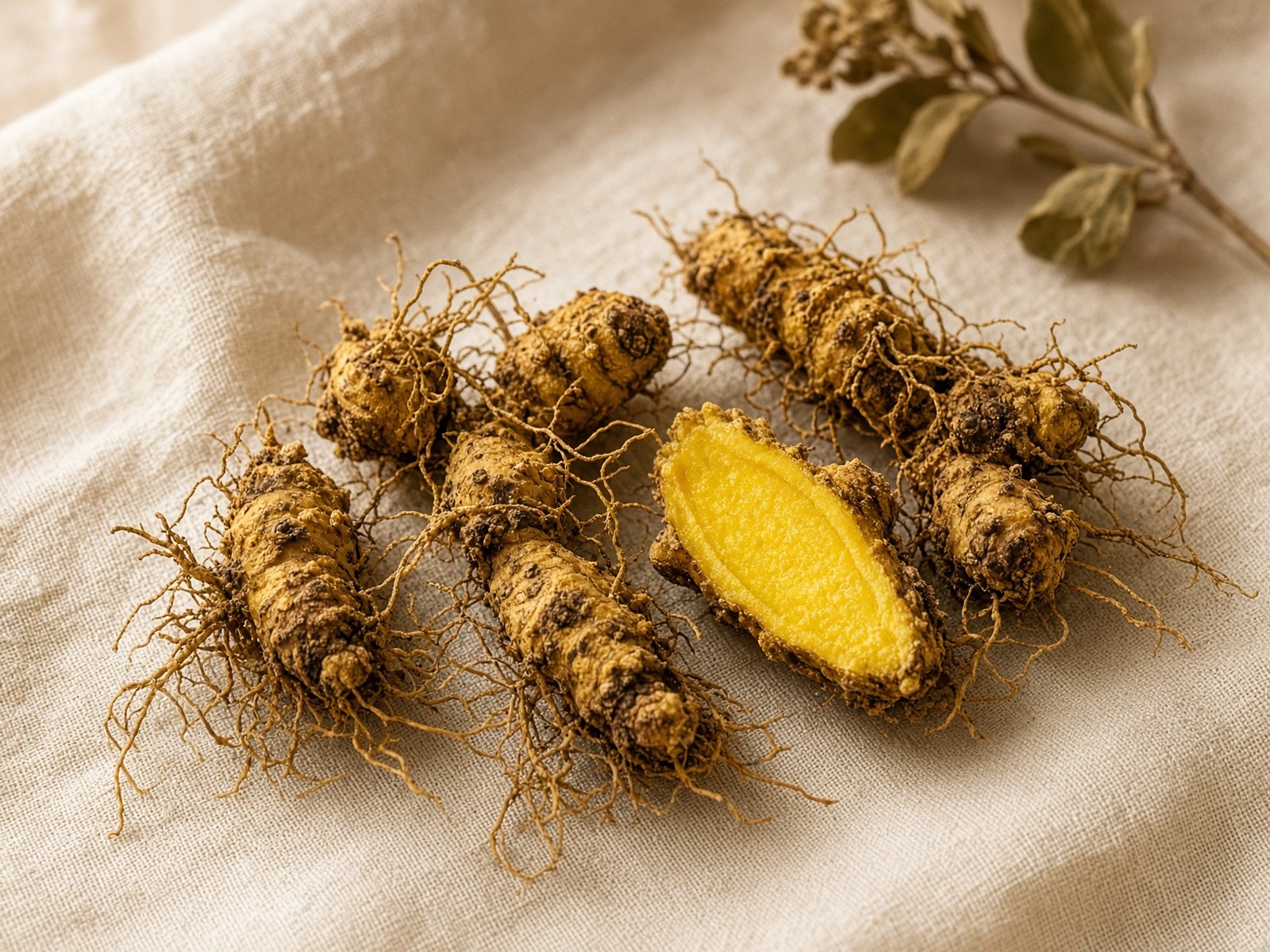
Ranunculaceae · rhizome, root
Goldenseal
Hydrastis canadensis
North American rhizome mapped as a traditional bitter mucosal plant. Human disease-outcome trials are lacking; conservation status is part of the monograph.
Safety first
At-risk wild species containing berberine and hydrastine. Not a 'drug-test masker.' Same berberine hard stops as Coptis: pregnancy, neonates, G6PD, and drug interactions. Restricted, not a cold-season tea.
Tradition vs trials
Traditional record. Eclectic physicians used goldenseal as a bitter mucosal tonic. That record is not supported by modern outcome trials.
Trial literature. Clinical literature is thin. Most 'berberine trial' data come from other species or isolated alkaloid and should not be pasted onto goldenseal.
Practical ranges
Educational ranges — not a prescription. Culinary use is not an extract.
dried rhizome
Traditional Eclectic/AHP-type ranges are typically 0.5–2 g dried rhizome or equivalent tincture, short-term; this is tradition, not a trial dose
AHP — Educational range only — not a prescription. A licensed clinician individualizes product, dose, and duration.
Pregnancy, nursing, children
- Pregnancy. Avoid. Berberine and related alkaloids are inappropriate in pregnancy.
- Nursing. Avoid.
- Children. Avoid, especially in infants.
Contraindications
- pregnancy and nursing
- neonates / G6PD deficiency
- unsupervised use with prescription drugs
Key interactions
- CYP3A4 / CYP2D6 / P-gp substrates · avoid
Berberine-containing crude drugs can alter drug levels.