Orobanchaceae · root
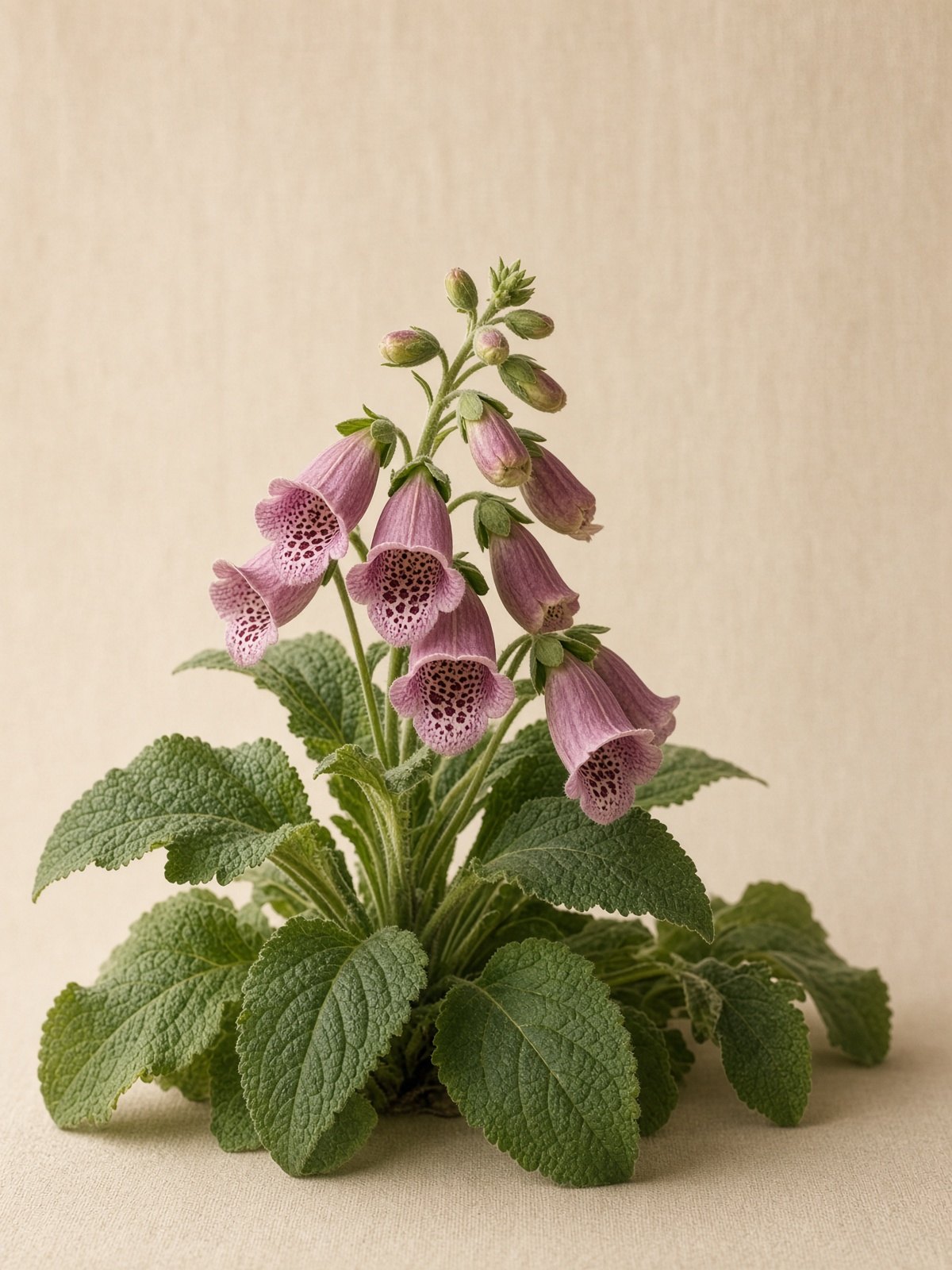
Chinese foxglove
Rehmannia glutinosa
Root mapped as Di Huang: chief yin-essence herb of Six Ingredient Rehmannia. Raw (sheng) vs prepared (shu) differ.
Safety first
Not Digitalis (foxglove). Heavy, cloying prepared rehmannia (shu di) can aggravate damp and loose stools. Raw vs prepared are different drugs. Not hormone replacement.
Tradition vs trials
Traditional record. Bensky: Shu Di Huang nourishes blood and Kidney yin/essence; Sheng Di Huang clears heat and cools blood.
Trial literature. Catalpol pharmacology is experimental. Pattern mapping is traditional.
Practical ranges
Educational ranges — not a prescription. Culinary use is not an extract.
root in formulas
Pharmacopoeia decoction ranges often around 9–15 g in Liu Wei Di Huang Wan neighborhood
Chinese Pharmacopoeia / Bensky — Educational range only — not a prescription. A licensed clinician individualizes product, dose, and duration.
Pregnancy, nursing, children
- Pregnancy. Classical blood-nourishing use is not unsupervised pregnancy clearance.
- Nursing. Insufficient reliable data; avoid unless a clinician directs otherwise.
- Children. Insufficient reliable data; avoid unless a clinician directs otherwise.
Contraindications
- loose stools / damp from cloying shu di unsupervised
- confusion with Digitalis
Key interactions
- none distinctive · note
Damp-aggravation is the practical issue for shu di.