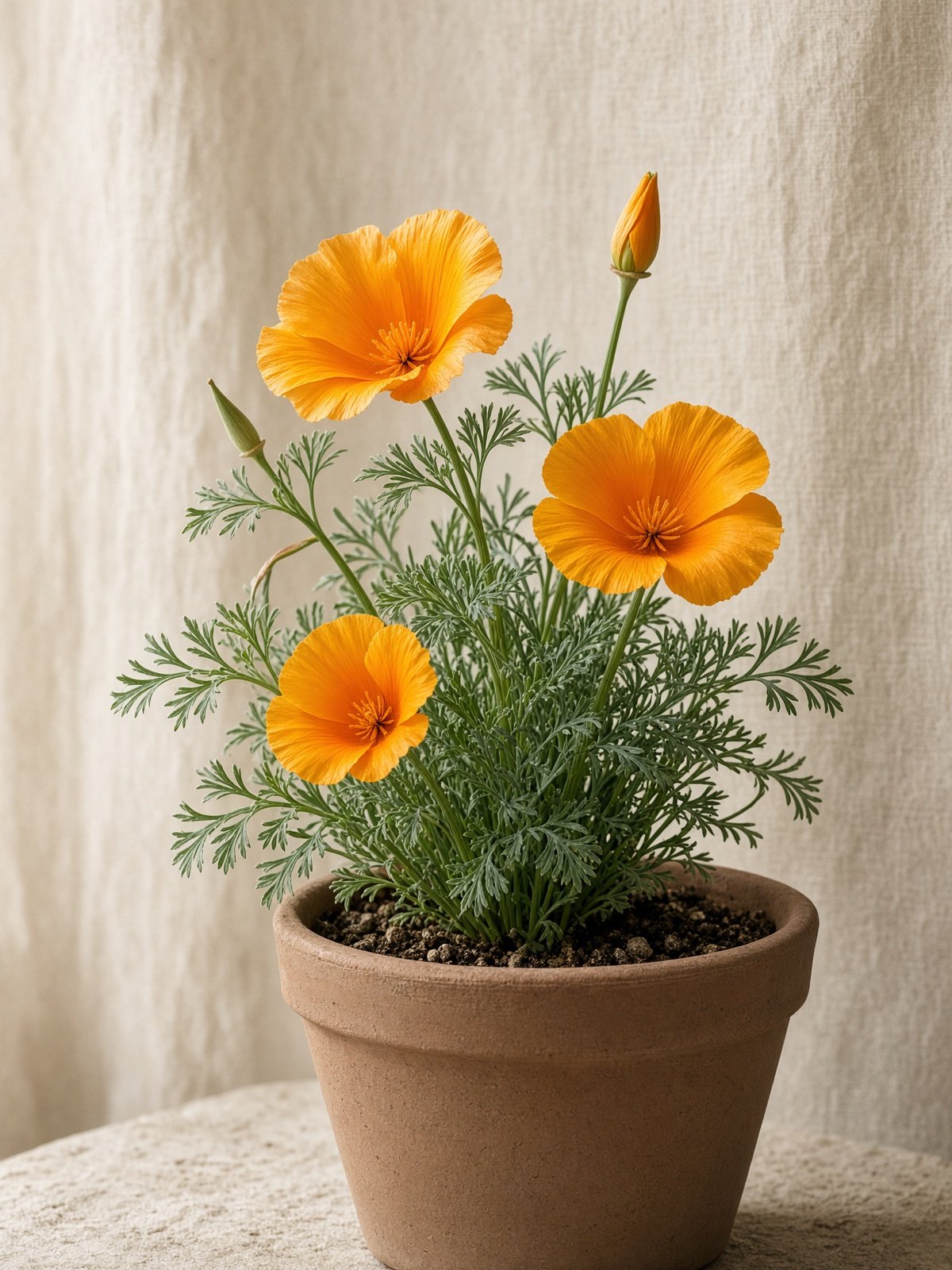
Papaveraceae · aerial parts
California poppy
Eschscholzia californica
Western aerial parts mapped as a traditional nervine. Human trials are sparse; the catalog tag is traditional.
Safety first
A non-opium poppy with traditional sedative use and very limited human data. Do not stack with prescription sedatives or assume it is free of CNS effects because it is not Papaver somniferum.
Tradition vs trials
Traditional record. North American and later European herbalism use the herb for restlessness. It is not a traditional Chinese or Ayurvedic official drug.
Trial literature. A few small combination or extract studies exist. They are not sufficient to upgrade evidence beyond traditional.
Practical ranges
Educational ranges — not a prescription. Culinary use is not an extract.
dried herb / tincture
No reliable official monograph range. Traditional Western tincture use is short-term evening nervine dosing — not a standardized trial range
ESCOP — Educational range only — not a prescription. A licensed clinician individualizes product, dose, and duration.
Pregnancy, nursing, children
- Pregnancy. Insufficient reliable data; avoid unless a clinician directs otherwise.
- Nursing. Insufficient reliable data; avoid unless a clinician directs otherwise.
- Children. Insufficient reliable data; avoid unless a clinician directs otherwise.
Contraindications
- unsupervised combination with sedative drugs
- known poppy-family allergy
Key interactions
- CNS depressants and alcohol · caution
Additive sedation is the conservative assumption.