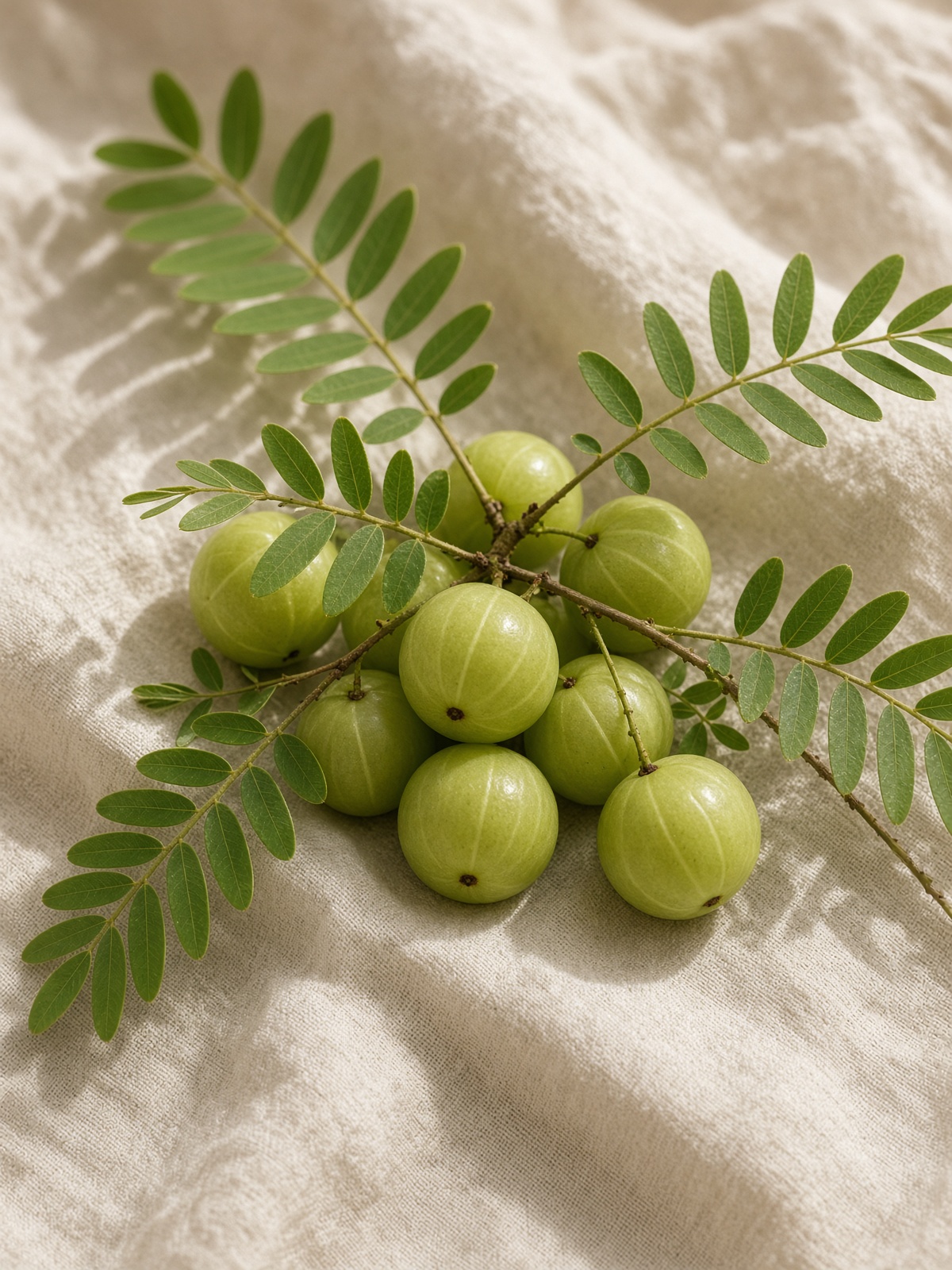
Phyllanthaceae · fruit
Amla
Phyllanthus emblica
Fruit mapped as a primary Ayurvedic rasayana and a constituent of triphala. Human trials exist but are small and heterogeneous; the catalog tag is traditional.
Safety first
Ripe fruit is a food in South Asian diets. Concentrated extracts and pickles high in salt are not automatically 'food-like' in the clinical sense.
Tradition vs trials
Traditional record. API and classical Ayurvedic compilations place amalaki among the foremost rasayana fruits and as one-third of triphala.
Trial literature. Small human studies on lipids, glycemic markers, and antioxidant assays exist. They are not a basis for disease claims.
Practical ranges
Educational ranges — not a prescription. Culinary use is not an extract.
dried fruit / churna
API-type traditional adult ranges are often 3–6 g fruit powder daily, alone or in triphala; this is tradition, not a prescription
Ayurvedic Pharmacopoeia of India (API) — Educational range only — not a prescription. A licensed clinician individualizes product, dose, and duration.
Pregnancy, nursing, children
- Pregnancy. Culinary fruit is food-like; concentrated extracts lack specific pregnancy trials.
- Nursing. Culinary fruit is food-like; concentrated extracts lack specific lactation trials.
- Children. Culinary fruit is food; medicinal churna doses are not automatically pediatric.
Contraindications
- known allergy
- caution with significant constipation if using astringent fruit alone
Key interactions
- generally low at culinary fruit doses · note
High-tannin powders can theoretically reduce iron absorption if taken with meals.